
Gas and Heating: Your Complete Guide for 2026
The relationship between gas and heating remains fundamental to millions of homes across the United Kingdom, particularly as we navigate evolving energy landscapes and regulatory frameworks in 2026. Understanding how gas-powered heating systems function, their maintenance requirements, and their place in modern domestic properties enables homeowners to make informed decisions about comfort, efficiency, and running costs. Whether you're considering a new installation, upgrading existing equipment, or simply seeking to optimise your current setup, comprehensive knowledge of gas and heating systems proves invaluable for both immediate needs and long-term planning.
Understanding Modern Gas and Heating Systems
Gas and heating technology has evolved significantly over recent decades, offering homeowners in Kent and throughout the UK multiple options tailored to different property types and usage patterns. Combination boilers, commonly known as combi boilers, dominate the market for their space-saving design and on-demand hot water delivery, eliminating the need for separate storage tanks. These units heat water directly from the mains when you turn on a tap, making them ideal for smaller properties or households with limited space.
System boilers represent another popular choice, incorporating a sealed hot water cylinder whilst drawing water directly from the mains. This configuration suits larger homes with multiple bathrooms where simultaneous hot water demand exceeds what a combi can provide. Traditional conventional boilers, whilst less common in new installations, remain prevalent in older properties with existing tank and cylinder infrastructure.

The American Gas Association provides extensive resources on gas infrastructure and safety standards that inform best practices worldwide, including the regulatory frameworks governing UK installations. Understanding these standards helps homeowners appreciate the rigorous safety requirements that Gas Safe registered engineers must meet when working on gas and heating equipment.
Key Components of Gas Heating Systems
Modern gas and heating installations comprise several interconnected elements working in harmony to deliver warmth and hot water throughout your property. The heat exchanger serves as the heart of the system, transferring thermal energy from burning gas to water circulating through the heating circuit. Premium heat exchangers constructed from stainless steel or high-grade aluminium offer superior longevity and efficiency compared to cheaper alternatives.
Essential system components include:
- Burner assembly: Controls gas flow and combustion efficiency
- Circulation pump: Moves heated water through radiators and pipework
- Expansion vessel: Accommodates water expansion during heating cycles
- Flue system: Safely removes combustion gases from the property
- Control mechanisms: Thermostats, programmers, and zone valves
The integration of smart heating controls has transformed how homeowners interact with their gas and heating systems, enabling precise temperature management, scheduling flexibility, and remote access via smartphone applications. These advances deliver measurable reductions in energy consumption whilst maintaining optimal comfort levels throughout the property.
Efficiency Considerations for Gas and Heating
Energy efficiency stands as a paramount concern for homeowners seeking to minimise running costs whilst reducing environmental impact. Modern condensing boilers achieve efficiency ratings exceeding 90%, recovering heat from exhaust gases that older non-condensing models simply vented to atmosphere. This technological advancement represents one of the most significant improvements in domestic gas and heating over the past two decades.
| Boiler Type | Typical Efficiency | Annual Running Cost* | CO2 Emissions |
|---|---|---|---|
| Modern Condensing | 90-94% | £800-£950 | 2.1 tonnes |
| Older Non-Condensing | 70-80% | £1,100-£1,300 | 2.8 tonnes |
| Traditional | 60-70% | £1,300-£1,500 | 3.2 tonnes |
*Based on average three-bedroom semi-detached property
Optimising System Performance
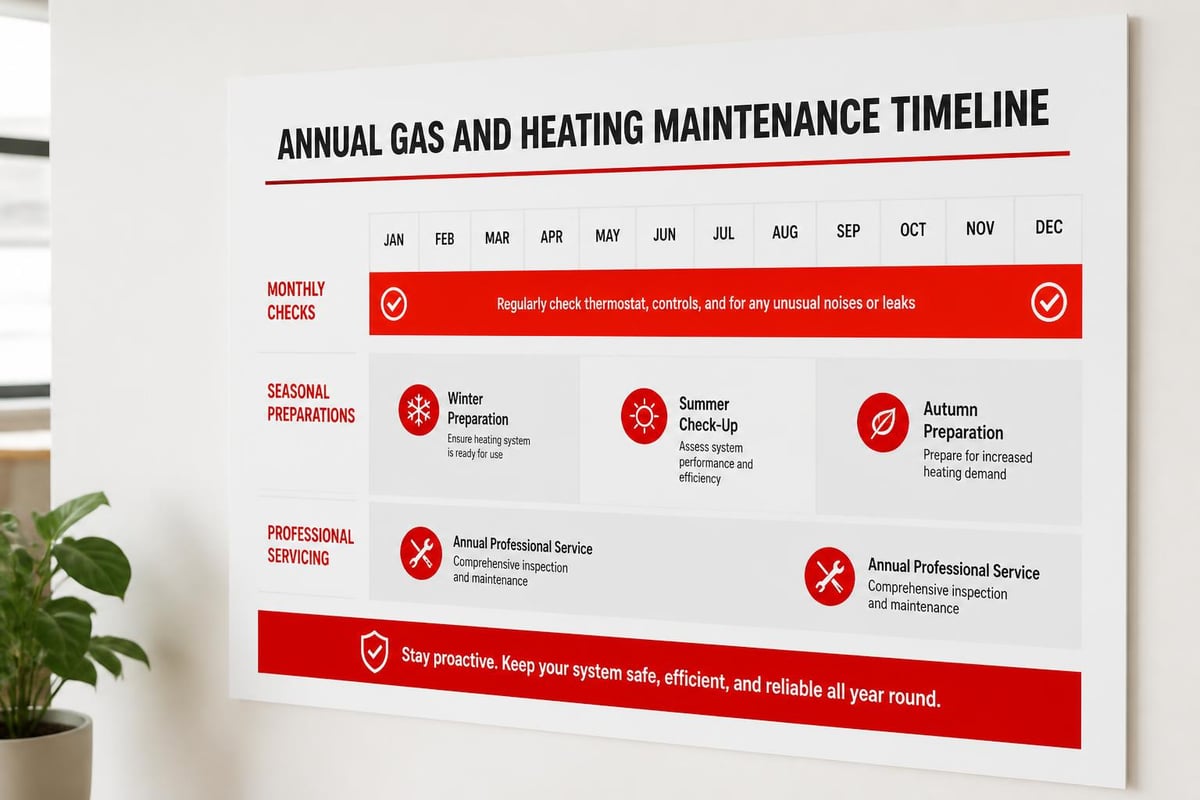
Regular maintenance forms the cornerstone of efficient gas and heating operation. Annual servicing by qualified professionals identifies potential issues before they escalate into costly failures whilst ensuring the system operates at peak efficiency. During a comprehensive boiler service, engineers inspect combustion quality, clean critical components, test safety devices, and verify correct operating pressures.
Maintenance tasks that enhance efficiency:
- Annual professional servicing by Gas Safe registered engineers
- Monthly pressure checks and adjustments when necessary
- Bleeding radiators to remove trapped air
- Checking condensate pipe remains clear and unfrozen
- Inspecting visible pipework for leaks or damage
System flushing procedures such as powerflushing remove accumulated sludge, rust, and debris that impede water circulation and heat transfer. This preventive maintenance extends equipment lifespan whilst restoring lost efficiency, particularly in older installations experiencing uneven heat distribution or cold spots on radiators.
Regulatory Framework and Safety Standards
The regulatory landscape governing gas and heating installations in the United Kingdom prioritises safety, environmental protection, and consumer welfare. Gas Safe Register represents the only official list of gas engineers legally permitted to work on gas appliances, replacing CORGI in 2009. Homeowners must verify engineer credentials before permitting any work on gas and heating equipment, as illegal installations pose serious risks including carbon monoxide poisoning, explosions, and fires.
Building Regulations Part L specifies minimum efficiency standards for new heating installations, whilst Part J governs combustion appliances and fuel storage systems. The National Association of Regulatory Utility Commissioners discusses similar regulatory approaches in other jurisdictions, highlighting the universal importance of robust oversight in natural gas distribution and utilisation.
Carbon Monoxide Safety
Carbon monoxide (CO) represents an invisible, odourless threat produced when gas appliances burn fuel incompletely due to inadequate ventilation, faulty equipment, or poor maintenance. Installing audible CO alarms in rooms containing gas and heating appliances provides essential early warning, whilst annual professional servicing verifies proper combustion and flue operation.
Warning signs of potential CO issues:
- Yellow or orange flames instead of crisp blue
- Sooting or staining around appliances
- Pilot lights frequently extinguishing
- Excessive condensation in rooms with gas appliances
- Physical symptoms including headaches, nausea, or dizziness
Immediate action becomes imperative if you suspect carbon monoxide presence: evacuate the property, contact the National Gas Emergency Service on 0800 111 999, and seek medical attention if experiencing symptoms.
Installation and Replacement Considerations
Selecting appropriate gas and heating equipment requires careful evaluation of property characteristics, household requirements, and budget constraints. System sizing proves critical, as oversized boilers cycle frequently and waste energy, whilst undersized units struggle to meet demand during peak usage periods. Qualified heating engineers calculate heat loss for individual properties, accounting for insulation levels, room volumes, glazing types, and typical occupancy patterns.
For homeowners concerned about upfront costs, financing options make modern, efficient gas and heating systems more accessible. Boiler finance arrangements spread installation costs over manageable monthly payments, enabling property owners to benefit immediately from improved efficiency and reliability whilst avoiding the burden of large lump-sum payments.

Installation Process Overview
Professional boiler installation follows systematic procedures ensuring safety, compliance, and optimal performance. Initial site surveys assess existing infrastructure, identify necessary modifications, and confirm suitable locations for new equipment and flue terminals. Engineers verify adequate gas supply capacity, electrical connections meet requirements, and drainage provisions accommodate condensate discharge.
Typical installation timeline:
- Day 1: Remove existing equipment, prepare pipework and fittings
- Day 2: Install new boiler, connect gas supply and controls
- Day 3: Commission system, test all functions, demonstrate operation
- Completion: Issue certification, register warranty, provide documentation
The Compressed Gas Association establishes technical standards for gas handling and storage that inform safe installation practices across the industry. Following completion, installers must provide Building Regulations compliance certificates and benchmark commissioning records detailing system parameters for future reference.
Troubleshooting Common Issues
Understanding typical gas and heating problems empowers homeowners to identify issues early and determine when professional assistance becomes necessary. Loss of pressure represents one of the most frequent complaints, often resulting from small leaks in pipework, radiator valves, or the expansion vessel. Topping up pressure following manufacturer guidelines resolves minor drops, but persistent pressure loss indicates underlying problems requiring expert diagnosis.
| Symptom | Likely Cause | Action Required |
|---|---|---|
| No hot water or heating | Thermostat setting, power supply, or component failure | Check settings, verify power, call engineer |
| Radiators cold at bottom | Sludge accumulation | System flush needed |
| Banging or kettling noises | Limescale on heat exchanger | Professional descaling |
| Radiators cold upstairs | Circulation or balancing issue | Balance system, check pump |
| Pilot light won't stay lit | Thermocouple fault or gas supply problem | Engineer required |
When to Contact Professionals
Whilst homeowners can perform basic troubleshooting, gas and heating systems demand professional intervention for most repairs and all gas-related work. Attempting DIY repairs on gas appliances not only contravenes legal requirements but poses severe safety risks. Contact qualified engineers immediately if you detect gas odours, experience complete system failure, or notice unusual operating sounds or behaviours.
The American Gas Association's Resource Library offers valuable industry insights and technical information, though practical work must always fall to appropriately qualified and registered professionals.
Future Trends in Gas and Heating
The trajectory of gas and heating technology points toward increasing integration with renewable energy sources and enhanced digital connectivity. Hybrid systems combining gas boilers with heat pumps offer flexibility to utilise whichever energy source proves most economical at any given moment, automatically switching between technologies to optimise efficiency and running costs. These installations position homeowners to adapt as energy markets evolve whilst maintaining reliable heating and hot water provision.
Hydrogen-ready boilers represent another emerging development, designed to operate on natural gas currently but requiring only minor modifications to burn hydrogen once distribution infrastructure develops. Government initiatives exploring hydrogen as a low-carbon heating fuel may transform the gas and heating landscape over coming decades, though widespread adoption faces significant infrastructure challenges.
Smart Technology Integration
Advanced controls incorporating artificial intelligence learn household patterns and adjust heating schedules automatically, eliminating manual programming whilst maintaining comfort and minimising waste. Geofencing capabilities detect when occupants leave or approach the property, adjusting temperatures accordingly without requiring conscious input. Integration with weather forecasting services enables predictive heating adjustments, warming properties ahead of temperature drops or reducing output during unexpectedly mild periods.
Voice assistant compatibility allows hands-free temperature control, whilst detailed energy monitoring dashboards highlight consumption patterns and identify optimisation opportunities. These technologies transform gas and heating from passive background infrastructure into actively managed systems delivering measurable efficiency gains.
Maintenance Best Practices
Proactive maintenance extends equipment lifespan, preserves efficiency, and prevents inconvenient breakdowns during cold weather when heating demand peaks. Beyond annual professional servicing, homeowners should implement regular monitoring routines checking pressure gauges, listening for unusual sounds, and noting any changes in system behaviour. Early detection of developing issues enables intervention before minor faults escalate into major failures.
Seasonal preparation tasks:
- Autumn: Schedule professional service before heating season begins
- Winter: Keep condensate pipes insulated to prevent freezing
- Spring: Bleed radiators after heating season concludes
- Summer: Run heating briefly monthly to maintain pump and valve function
System longevity directly correlates with maintenance consistency. Well-maintained gas and heating installations regularly exceed manufacturer-quoted lifespans, whilst neglected equipment fails prematurely, necessitating expensive emergency replacements during the coldest months when engineer availability and equipment costs peak.
The Library of Congress oil and gas industry guide provides historical context for energy infrastructure development, demonstrating how systematic maintenance practices emerged as essential elements of reliable service provision across all scales of gas distribution and utilisation.
Environmental Considerations
Gas and heating systems occupy a complex position in contemporary environmental discussions. Natural gas produces lower carbon emissions than oil or coal whilst delivering reliable, controllable heat perfectly suited to British climate patterns. However, increasing focus on decarbonisation raises questions about long-term viability and encourages homeowners to maximise efficiency of existing installations whilst remaining aware of emerging alternatives.
Strategies to reduce environmental impact:
- Upgrade to high-efficiency condensing boilers
- Install smart controls for precise temperature management
- Improve property insulation to reduce heat demand
- Consider hybrid systems incorporating renewable technologies
- Maintain equipment properly to preserve peak efficiency
Right-sizing heating systems prevents unnecessary fuel consumption, as oversized boilers waste energy cycling on and off rather than operating in their optimal range. Professional heat loss calculations ensure new installations match actual requirements rather than applying rule-of-thumb estimates that frequently result in excessive capacity.
Choosing Professional Services
Selecting qualified professionals for gas and heating work protects safety, ensures regulatory compliance, and delivers lasting results. Gas Safe registration represents the minimum credential, but additional qualifications, manufacturer training, and professional memberships indicate commitment to excellence beyond statutory requirements. Established companies with extensive customer reviews and transparent pricing structures offer greater confidence than transient traders lacking verifiable credentials or fixed business addresses.
Requesting detailed quotations specifying equipment models, warranty terms, and scope of work enables meaningful comparisons between providers. Be wary of significantly underpriced offers, which may indicate use of inferior equipment, shortcuts in installation procedures, or omission of essential elements from quoted prices. Quality gas and heating installations represent substantial investments deserving careful selection of appropriately skilled professionals.
Understanding the natural gas regulation landscape helps homeowners appreciate the comprehensive oversight governing both the industry and individual practitioners. These frameworks exist specifically to protect consumers, ensuring work meets rigorous safety and performance standards regardless of which contractor performs the installation.
Mastering the fundamentals of gas and heating empowers homeowners throughout Kent to maintain comfortable, efficient properties whilst managing costs and environmental impact effectively. Whether you require routine maintenance, system upgrades, or emergency repairs, working with experienced Gas Safe registered professionals ensures safety and reliability. Castle Heating Kent brings over two decades of expertise to every installation, service, and repair across Rochester, Gravesend, and surrounding areas, delivering the professional solutions your home deserves.

