
Rainwater Drain Blocked with Mud: Complete Repair Guide
When heavy rainfall hits Kent, homeowners quickly discover whether their drainage systems are working properly. A rainwater drain blocked with mud can cause significant problems, from flooded gardens to water damage near your property's foundation. Understanding how to identify, clear, and prevent these blockages will save you time, money, and the stress of dealing with waterlogged areas around your home. This comprehensive guide explores the causes, solutions, and preventative measures that keep your external drainage flowing smoothly throughout the year.
Understanding Why Rainwater Drains Block with Mud
Mud accumulation in rainwater drains doesn't happen overnight. The process begins gradually as sediment washes into your drainage system during storms.
Garden soil, particularly during Kent's wet seasons, erodes into pathways and driveways, eventually finding its way into drain openings. Construction work, landscaping projects, or even poorly maintained flower beds contribute to the problem. When soil mixes with water, it creates a heavy slurry that settles in pipes rather than flowing through them.
The Science Behind Sediment Buildup
Rainwater drains are designed to handle water, not solid materials. When mud enters the system, gravity causes heavier particles to sink and accumulate at low points in the pipework.
Over time, these deposits solidify, creating stubborn blockages that resist simple flushing. The problem worsens during dry periods when deposited mud hardens, forming a concrete-like barrier. When the next rainfall arrives, water cannot penetrate this obstruction, leading to surface flooding and potential property damage.
Key factors that accelerate mud blockages include:
- Sloped gardens that channel soil runoff directly into drains
- Missing or damaged drain covers that allow unrestricted debris entry
- Poor landscaping that fails to contain soil during heavy rain
- Nearby construction activities that generate excess sediment
- Deteriorating pipework with rough internal surfaces that trap particles
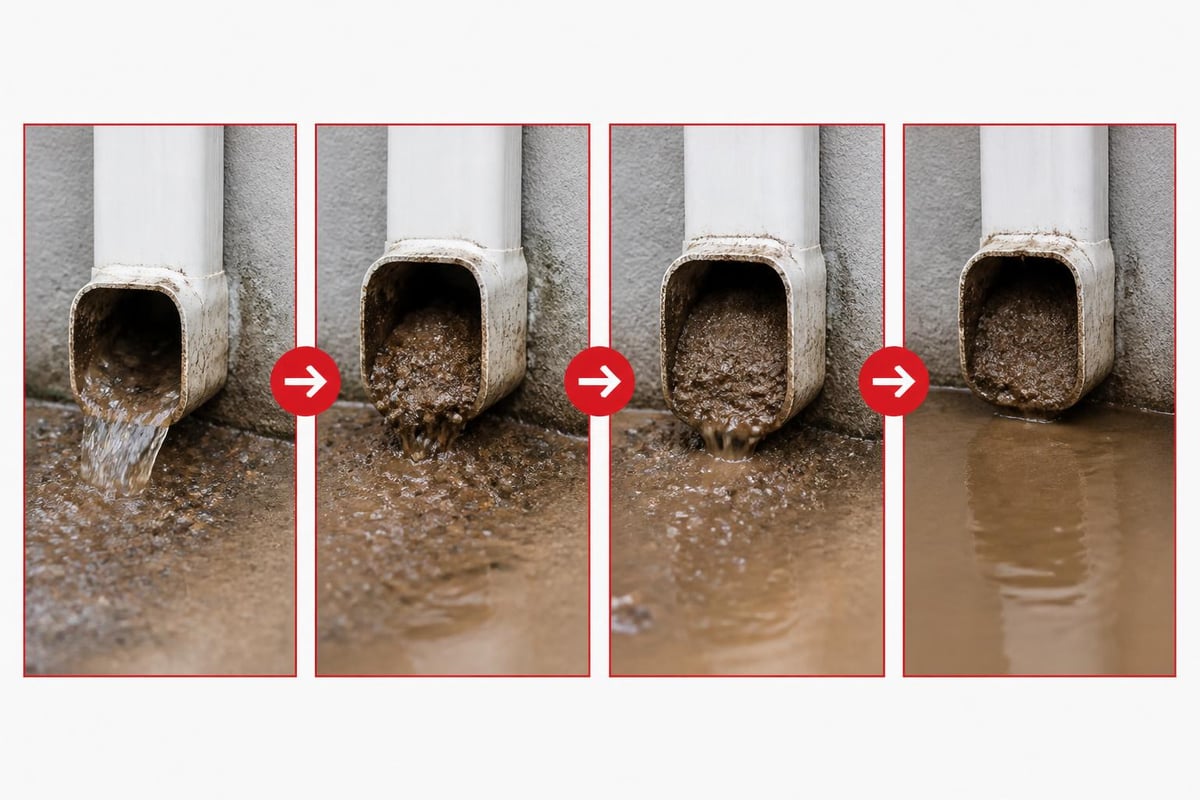
Identifying a Rainwater Drain Blocked with Mud
Early detection prevents minor drainage issues from becoming major problems. Several warning signs indicate your rainwater system needs attention.
Standing water around drain grates after rainfall is the most obvious symptom. You might notice puddles persisting for hours or even days after the weather clears. Gurgling sounds from drains suggest air trapped by partial blockages, whilst slow water drainage indicates restricted flow.
Visual Inspection Techniques
Start by examining visible drain covers during or immediately after rainfall. Remove the grate carefully and look inside with a torch. A rainwater drain blocked with mud will show visible sediment buildup, often with a distinctive earthy smell.
Check for water backing up into the drain from below rather than flowing away. This reverse flow confirms a downstream obstruction. Around your property's perimeter, look for soil erosion patterns that might indicate where mud originates. The common causes of blocked rainwater drains include various debris types, but mud presents unique challenges.
| Warning Sign | What It Indicates | Urgency Level |
|---|---|---|
| Standing water for 2+ hours | Partial or complete blockage | High |
| Gurgling sounds | Air trapped by obstruction | Medium |
| Visible sediment buildup | Early-stage blockage | Medium |
| Water overflow during rain | Complete blockage | Critical |
| Slow drainage | Partial restriction | Low to Medium |
DIY Methods for Clearing Mud Blockages
Homeowners can resolve many mud blockages without professional assistance. Success depends on using appropriate techniques for the blockage severity.
Manual Debris Removal
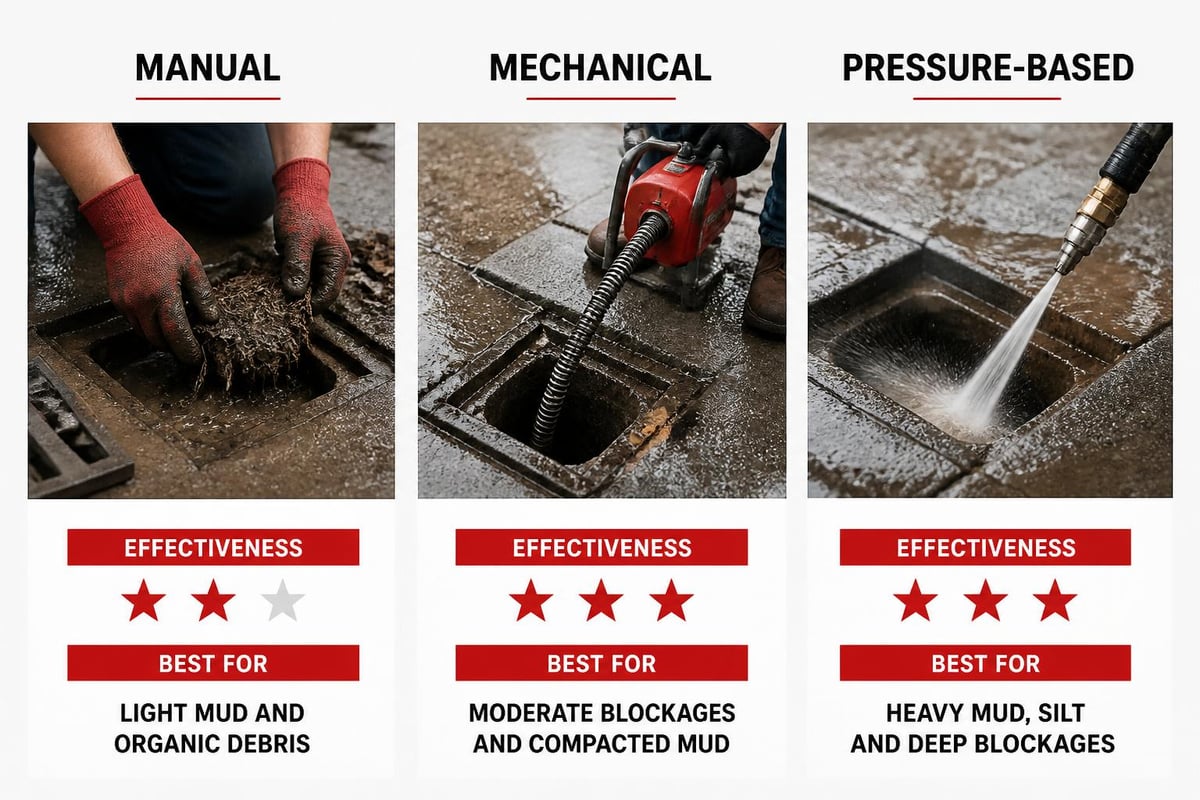
Begin by removing the drain cover and clearing any visible mud or debris by hand. Wear waterproof gloves and protective eyewear, as drain water may contain bacteria. Use a small garden trowel or similar tool to scoop out accessible sediment.
Dispose of removed mud in garden waste rather than washing it into another drain. This initial clearance often reveals the extent of the blockage and whether deeper intervention is needed.
Using Drain Rods Effectively
For blockages beyond arm's reach, drain rods provide an effective solution. These flexible tools consist of connected sections that extend deep into pipework. Using drain rods properly requires technique and patience.
Step-by-step drain rodding process:
- Connect sufficient rod sections to reach the suspected blockage location
- Insert rods into the drain and rotate clockwise only (never anticlockwise)
- Apply gentle forward pressure whilst rotating to break up mud deposits
- Withdraw rods periodically to remove dislodged material
- Flush with water to test flow improvement
- Repeat until water drains freely
Always rotate drain rods clockwise to prevent sections disconnecting underground, which creates a new problem requiring professional retrieval.
High-Pressure Water Jetting
For stubborn mud blockages, pressure washing can prove highly effective. A domestic pressure washer with a drain jetting attachment delivers focused water streams that break apart compacted sediment.
Insert the jetting nozzle into the drain and allow water pressure to propel it forward. The backward-facing jets dislodge mud whilst pulling the hose deeper into the pipe. This method works particularly well for clearing dirt accumulation in drain pipes, though it requires appropriate equipment and careful handling.
Chemical Solutions and Their Limitations
Many homeowners wonder whether chemical drain cleaners can dissolve a rainwater drain blocked with mud. Unfortunately, these products prove largely ineffective against inorganic blockages.
Chemical cleaners target organic materials like hair, grease, and food waste. Mud consists of minerals and soil particles that don't react to caustic substances. Pouring chemicals into mud-blocked drains wastes money and introduces harmful substances into the environment without solving the problem.
Why Physical Removal Outperforms Chemicals
Chemical cleaners are ineffective on mud blockages because they cannot break down mineral content. Physical removal methods address the root cause by mechanically displacing sediment.
Hot water alone provides limited benefit, though it may help soften recent mud deposits. Some homeowners report success using washing-up liquid followed by hot water for maintenance, but this approach works best for preventing blockages rather than clearing established ones.
Professional Drainage Solutions
Severe blockages or recurring problems warrant professional intervention. Specialists possess equipment and expertise that exceed typical DIY capabilities.
Professional drainage engineers use industrial-grade jetters that deliver water at pressures up to 4,000 PSI. These machines clear even the most stubborn mud accumulations efficiently. Additionally, professionals employ CCTV drain surveys to identify underlying issues that contribute to repeated blockages.
When to Call Drainage Specialists
Consider professional help when DIY methods fail after reasonable attempts. If you've spent several hours rodding and jetting without improvement, the blockage may extend further than accessible pipework reaches.
Recurring blockages within weeks of clearing suggest structural problems requiring professional diagnosis. For homeowners in Rochester, Gravesend, and surrounding areas, drainage services provide comprehensive solutions backed by experienced technicians.
Professional services include:
- CCTV drain surveys to locate and assess blockages
- Industrial water jetting at pressures DIY equipment cannot match
- Drain excavation and repair for damaged pipework
- Root cutting for intrusive tree root systems
- Relining services to restore pipe integrity without excavation
| DIY Approach | Professional Service | Best Used When |
|---|---|---|
| Manual clearing | CCTV survey | Recurring blockages need diagnosis |
| Domestic pressure washer | Industrial jetting | Stubborn compacted mud resists DIY |
| Drain rods | Excavation and repair | Structural damage causes blockages |
| Regular maintenance | Preventative contracts | Multiple drains need ongoing care |
Preventative Measures for Long-Term Protection
Preventing a rainwater drain blocked with mud requires less effort than repeatedly clearing blockages. Strategic interventions reduce sediment entry and maintain system performance.
Installing Protective Grates and Filters
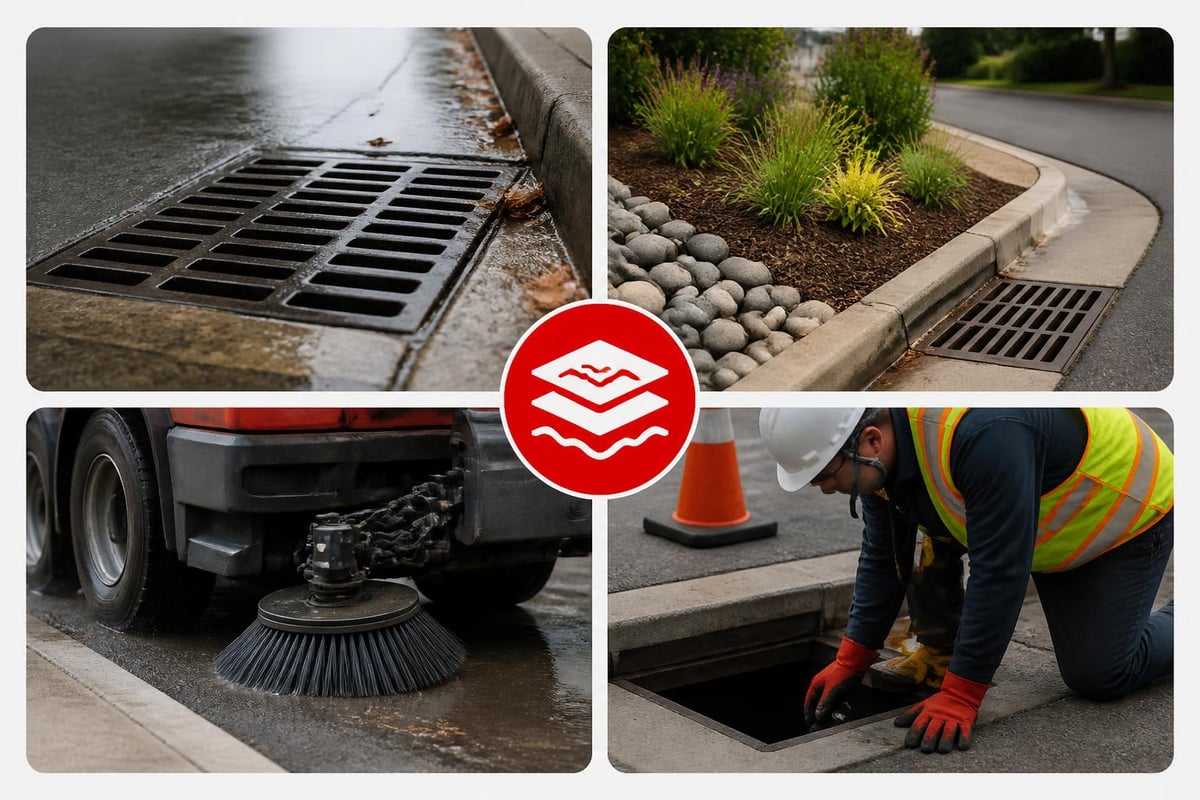
Drain covers serve as your first defence against debris entry. Ensure all external drains have properly fitted grates that prevent large debris whilst allowing water flow. Consider upgrading to finer mesh covers in areas prone to soil runoff.
Clean drain covers monthly, removing accumulated leaves and sediment before they wash into pipes. This simple maintenance task significantly reduces blockage frequency.
Landscaping Strategies
Garden design directly impacts drainage performance. Create barriers between soil beds and drains using gravel borders or paving. These features intercept sediment before it reaches drainage systems.
Sloped gardens require particular attention. Install soil retention methods such as terracing, retaining walls, or ground cover plants with extensive root systems that stabilise soil. Preventing outside drain blockages includes addressing environmental factors that contribute to sediment mobilisation.
Regular Maintenance Schedules
Establish a seasonal maintenance routine that addresses drainage before problems develop. Autumn requires particular vigilance as falling leaves combine with increased rainfall.
Quarterly maintenance checklist:
- Remove and clean all drain covers
- Flush drains with garden hose to check flow
- Inspect surrounding areas for soil erosion
- Clear gutters to prevent overflow contamination
- Check for subsidence or ground movement near drains
Spring cleaning should include thorough drain flushing after winter weather potentially deposits sediment. Summer offers ideal conditions for deeper maintenance tasks when drains are dry and accessible.
Understanding Your Drainage System Layout
Knowing your property's drainage configuration helps you maintain and troubleshoot effectively. Most homes have separate systems for foul water (toilets and sinks) and surface water (rainwater from roofs and grounds).
Rainwater drains typically connect to soakaways or surface water sewers. Understanding where your drains lead influences how you approach blockages and whether they pose immediate risks to your property.
Mapping Your External Drains
Create a simple diagram showing all external drain locations, including gullies, inspection chambers, and connection points. Note which drains service particular areas-roofline gutters, patio drainage, or driveway runoff.
This map proves invaluable when blockages occur, allowing you to trace water flow and identify likely obstruction points. Share this information with any professionals you engage for drainage services, enabling more efficient diagnosis and repair.
Seasonal Considerations for Kent Properties
Kent's climate presents specific drainage challenges throughout the year. Winter brings frequent rainfall that tests system capacity, whilst spring snowmelt can mobilise large sediment volumes.
Summer thunderstorms deliver intense rainfall that overwhelms compromised drains, and autumn leaf fall creates additional blockage risks. Adapting your maintenance approach to seasonal patterns prevents problems before they develop.
Winter Preparation
Before winter arrives, conduct comprehensive drain clearing to ensure maximum flow capacity. Remove autumn leaf accumulation and flush systems thoroughly. Consider that frozen ground can prevent proper drainage even in clear pipes, so monitor for ice formation in exposed sections.
Heavy clay soils common in Kent become waterlogged during winter, increasing erosion potential. Protect vulnerable areas with temporary barriers or improved ground cover.
Spring and Summer Maintenance
As vegetation grows, monitor for root intrusion into drainage systems. Trees planted near drain runs eventually send roots seeking water, penetrating joints and creating blockages. Understanding the risks of blocked stormwater drains includes recognising how seasonal growth patterns affect underground infrastructure.
Summer maintenance focuses on clearing systems before autumn challenges arrive. Use dry weather to conduct deeper inspections and repairs that require extended access to drain interiors.
Cost Considerations for Drainage Solutions
Understanding the financial implications of both DIY and professional approaches helps homeowners make informed decisions. Initial investments in prevention and proper tools often prove more economical than repeated emergency callouts.
DIY Equipment Investment
Basic drain maintenance requires minimal investment. Essential tools include quality rubber gloves, drain rods with various attachments, and a decent torch. Budget approximately £50-£100 for these fundamentals.
For more comprehensive DIY capability, a pressure washer with drain jetting kit costs £150-£300. This equipment serves multiple purposes beyond drainage, making it a worthwhile investment for proactive homeowners.
Professional Service Pricing
Professional drain clearing typically costs £80-£150 for straightforward blockages. Complex situations requiring CCTV surveys add £100-£200, whilst excavation and repair work can exceed £1,000 depending on extent and accessibility.
Prevention remains the most cost-effective approach. Regular maintenance costing nothing but time prevents expensive emergency repairs. For larger properties or recurring issues, annual service contracts offer peace of mind at predictable costs.
Environmental Impact and Responsible Practices
Clearing a rainwater drain blocked with mud presents environmental considerations. Responsible homeowners balance effective blockage removal with minimal ecological impact.
Avoid washing removed mud directly into other drains or watercourses. Dispose of sediment in garden areas where it can reintegrate naturally, or bag it for waste collection if contaminated. Chemical cleaners that eventually reach waterways harm aquatic ecosystems, providing another reason to favour physical removal methods.
Sustainable Drainage Solutions
Modern sustainable drainage systems (SuDS) manage rainwater at source, reducing strain on traditional drains. Features like permeable paving, rain gardens, and soakaways allow natural infiltration rather than channelling all water into pipes.
Consider incorporating SuDS principles when renovating outdoor spaces. These approaches reduce the volume and velocity of water entering drains, minimising sediment mobilisation and blockage risks.
Health and Safety Considerations
Working with drainage systems involves potential hazards that require appropriate precautions. Drain water may contain harmful bacteria, particularly if foul and surface water systems have cross-contaminated.
Essential Safety Equipment
Always wear waterproof gloves rated for chemical and biological resistance. Safety goggles protect against splashes when using pressure washers or drain rods. Consider a face mask for particularly unpleasant blockages or when working in confined spaces with poor ventilation.
Ensure stable footing when working around wet drain areas. Remove drain covers carefully, as they can be heavy and may have sharp edges. Never lean directly over open drains when rodding or jetting, as blockages can dislodge suddenly, causing water surges.
Safety checklist for drain work:
- Wear appropriate protective equipment at all times
- Work in daylight or with adequate lighting
- Keep children and pets away from work areas
- Wash hands thoroughly after completing work
- Disinfect tools before storing them
- Seek medical attention if you sustain cuts or contamination
Long-Term Solutions for Chronic Issues
Some properties experience persistent drainage problems despite regular maintenance. These situations require more comprehensive solutions that address underlying causes.
Chronic mud blockages may indicate inadequate drain sizing for the property's runoff volume, ground movement affecting pipe alignment, or deteriorated pipework with internal roughness that traps sediment. Professional assessment identifies whether repairs, upgrades, or complete replacement offer the best long-term solution.
Drain Relining and Replacement
Modern trenchless drain relining inserts a new pipe lining inside existing pipework, restoring smooth internal surfaces without excavation. This approach suits drains where structural integrity remains acceptable but internal degradation causes blockages.
Complete replacement becomes necessary when pipes have collapsed, severely misaligned, or deteriorated beyond salvage. Whilst more expensive initially, modern drainage materials offer superior longevity and performance compared to older clay or concrete pipes.
For homeowners facing significant drainage investments alongside heating system updates, exploring flexible payment options through finance programmes can make essential home improvements more manageable whilst protecting your property from water damage.

Working with Local Authorities
Understanding your responsibilities versus those of local authorities prevents disputes and ensures proper maintenance. Generally, homeowners maintain drains within their property boundaries, whilst councils manage public sewers and main drainage infrastructure.
Surface water drains that serve only your property fall under your maintenance responsibility. Shared drains serving multiple properties have divided responsibilities depending on specific circumstances and historical arrangements. Contact your local water authority if uncertain about ownership and maintenance obligations.
Reporting Public Drainage Issues
When blockages affect public drainage systems or shared infrastructure, report them promptly to the relevant authority. Document the problem with photographs and notes about when it started and any contributing factors you've observed.
Most councils maintain emergency response systems for serious drainage failures that threaten properties or public highways. For less urgent issues, standard reporting channels ensure problems reach appropriate maintenance teams.
Managing a rainwater drain blocked with mud requires understanding the causes, employing effective clearing techniques, and implementing preventative measures that address your property's specific conditions. Regular maintenance, proper landscaping, and prompt attention to warning signs keep drainage systems functioning reliably throughout Kent's varied weather conditions. When problems exceed DIY capabilities or persist despite your best efforts, Castle Heating Kent offers comprehensive plumbing and drainage solutions backed by experienced professionals who understand local property challenges. Our team serves Rochester, Gravesend, and surrounding areas with reliable service that protects your home from water damage and keeps your drainage systems flowing smoothly year-round.

