
Small Boilers: Complete Guide for UK Homes in 2026
When space is at a premium in your property, choosing the right heating solution becomes a careful balancing act between performance, efficiency, and physical footprint. Small boilers have evolved significantly over the past decade, offering homeowners in compact flats, terraced houses, and smaller properties an effective way to maintain comfortable living conditions without sacrificing valuable space. Understanding the options available, the technical considerations, and the long-term implications of your choice can make the difference between an installation that serves you well for years and one that creates ongoing frustration.
Understanding Small Boilers and Their Applications
Small boilers typically refer to heating units with outputs ranging from 12kW to 24kW, designed specifically for properties with limited space and moderate heating demands. These compact units have become increasingly sophisticated, incorporating advanced technology that maximizes efficiency whilst minimizing their physical dimensions.
The definition of residential boilers from an energy conservation perspective helps clarify what distinguishes smaller units from their larger counterparts. For most UK households, particularly flats and smaller terraced properties, a small boiler provides adequate heating and hot water without the excess capacity that would waste energy and increase running costs.
Key Characteristics of Compact Heating Units
Modern small boilers incorporate several features that make them particularly suitable for space-constrained environments:
- Reduced physical dimensions allowing installation in kitchen cupboards, utility spaces, or even bathroom enclosures
- Lower output ratings matched to the heating demands of smaller properties
- Improved efficiency ratings often exceeding 90% for condensing models
- Simplified installation requirements reducing both time and labour costs
- Quieter operation through improved insulation and component design
Properties with one or two bedrooms, limited radiator circuits, and modest hot water demands benefit most from these compact solutions. The heating and plumbing services sector has seen growing demand for appropriately sized units as homeowners recognize that bigger isn't always better.
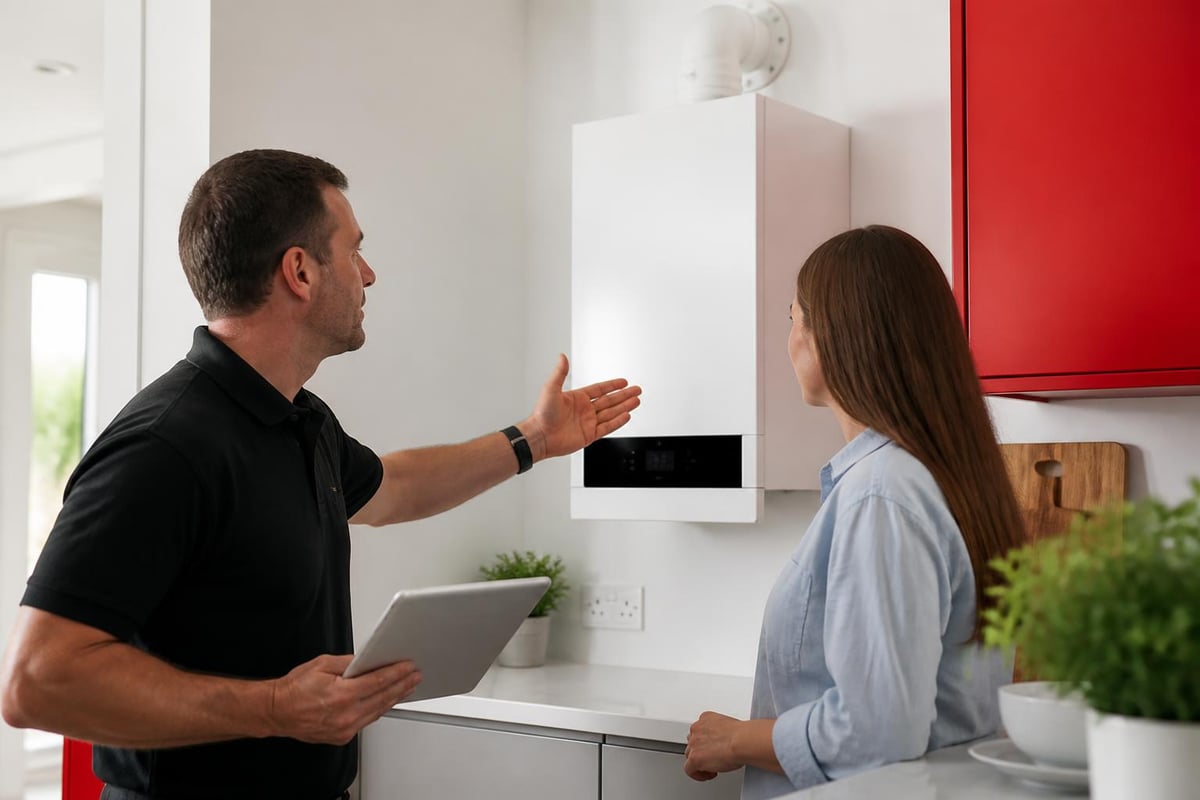
Types of Small Boilers Available
The boiler market offers several configurations, each suited to different property layouts and usage patterns. Understanding these variations helps ensure your selection aligns with your specific circumstances.
Combi Boilers for Compact Properties
Combination boilers remain the most popular choice for smaller properties, delivering both heating and hot water on demand without requiring a separate cylinder. These units heat water directly from the mains when you open a tap, eliminating the need for storage tanks and freeing up valuable space.
Advantages of small combi boilers:
- No separate hot water cylinder required
- Instant hot water delivery to taps and showers
- Excellent space efficiency
- Lower installation costs compared to system boilers
- Reduced heat loss from stored water
Limitations to consider:
- Hot water flow rate depends on mains pressure
- Cannot supply multiple outlets simultaneously at full pressure
- Less suitable for properties with multiple bathrooms
System and Heat-Only Options
For properties with existing cylinder infrastructure or those requiring simultaneous hot water delivery to multiple outlets, system boilers or heat-only (regular) boilers may prove more appropriate. These configurations work with a separate hot water cylinder, maintaining a reserve of heated water ready for use.
| Boiler Type | Space Required | Installation Complexity | Multiple Outlet Performance | Typical Output Range |
|---|---|---|---|---|
| Combi | Minimal | Low | Moderate | 12-24kW |
| System | Moderate | Medium | Excellent | 12-30kW |
| Heat-Only | High | High | Excellent | 12-35kW |
The boiler installation services you engage should assess your property thoroughly before recommending a specific configuration, considering factors beyond just physical space.
Sizing Your Small Boiler Correctly
Proper sizing represents one of the most critical decisions in the specification process. An undersized unit will struggle to maintain comfortable temperatures during cold weather, whilst an oversized boiler cycles on and off frequently, reducing efficiency and component lifespan.
Calculating Heat Loss and Demand
Professional heating engineers use detailed heat loss calculations that account for:
- Wall construction and insulation levels
- Window type, size, and orientation
- Room volumes and ceiling heights
- Expected internal temperature requirements
- Geographical location and exposure
According to regulations and standards governing boiler technology, proper sizing ensures both performance and safety. A Gas Safe registered engineer will typically perform these calculations using specialized software that factors in all relevant variables.
Factors influencing size selection:
- Number of radiators requiring heat
- Hot water usage patterns and simultaneous demand
- Property age and construction materials
- Existing or planned insulation improvements
- Future extension or conversion plans
For a typical two-bedroom flat in Kent, a 15-18kW combi boiler often provides adequate performance. Three-bedroom terraced houses might require 20-24kW, depending on specific circumstances. The boiler service professionals you consult should provide detailed justification for their recommendations.

Installation Considerations for Compact Spaces
Installing small boilers in restricted spaces requires careful planning to ensure safe operation, adequate ventilation, and easy future access for maintenance. The location you choose affects everything from installation costs to long-term reliability.
Suitable Installation Locations
Modern condensing boilers require specific installation conditions to function correctly and comply with building regulations:
- Kitchen cupboards: Most common location, requiring adequate ventilation and clearance
- Utility rooms: Ideal where available, separating noise from living areas
- Bathroom installations: Permitted under certain circumstances with appropriate safety measures
- External mounting: Weather-resistant models can free up interior space entirely
The compliance requirements governing boiler installations, whilst focused on commercial applications, highlight the importance of proper ventilation and emissions management that applies equally to domestic settings.
Ventilation and Flue Requirements
All gas boilers require appropriate flue systems to safely remove combustion products. Small boilers typically use one of three flue configurations:
- Horizontal flues extending through an external wall
- Vertical flues running upward through the roof
- Plume management kits for installations near windows or boundaries
Distance regulations govern flue terminal positions relative to windows, doors, air bricks, and property boundaries. Your installer must verify compliance before commencing work, as incorrect positioning can create dangerous situations and invalidate warranties.
Efficiency and Running Costs
The efficiency of small boilers has improved dramatically with condensing technology becoming standard. Modern units achieve efficiency ratings exceeding 90%, converting the vast majority of fuel energy into useful heat.
Understanding Efficiency Ratings
Two key metrics define boiler efficiency:
ErP ratings classify boilers from A+++ (most efficient) to G (least efficient), helping consumers compare models. Most small boilers now achieve A-rating as standard, with premium models reaching A+ or higher.
SEDBUK percentages indicate the proportion of fuel converted to useful heat under standardized test conditions. A 92% SEDBUK rating means 92% of gas energy becomes heat, with 8% lost through flue gases and other inefficiencies.
| Efficiency Rating | Annual Gas Cost (Typical 2-bed flat) | CO2 Emissions (kg/year) | Potential Savings vs. Old Boiler |
|---|---|---|---|
| A-rated (90%+) | £450-550 | 2,200-2,600 | £200-300 |
| B-rated (86-90%) | £550-650 | 2,600-3,000 | £100-200 |
| G-rated (<70%) | £750+ | 3,500+ | Baseline |
These figures assume average usage patterns and 2026 energy prices. Actual costs vary based on usage, property characteristics, and tariff structures. When comparing options, consider lifetime running costs rather than just purchase price.
For homeowners concerned about upfront investment, boiler finance options can spread the cost over manageable monthly payments, making efficient modern units more accessible whilst delivering immediate reductions in energy bills.

Control Systems and Smart Technology
Small boilers benefit enormously from advanced controls that optimize operation based on actual heating needs rather than running continuously. Smart thermostats and programmers have transformed how efficiently these units operate.
Programmable Controls and Weather Compensation
Modern control systems offer several efficiency-enhancing features:
- Time and temperature programming allowing different settings for various times and days
- Weather compensation adjusting boiler output based on external temperatures
- Load compensation modulating output to match actual demand
- OpenTherm compatibility enabling digital communication between boiler and controls
The smart heating controls available in 2026 include learning algorithms that adapt to your routines, geofencing that adjusts settings based on your location, and remote access through smartphone applications.
Zoning for Enhanced Efficiency
Even in smaller properties, heating zones allow independent temperature control for different areas. A typical two-bedroom flat might benefit from separate zones for:
- Living areas requiring higher temperatures during evenings
- Bedrooms needing warmth in mornings but less during the day
- Bathrooms maintaining consistent comfort levels
Thermostatic radiator valves (TRVs) provide room-by-room control, whilst smart TRVs integrate with your central system for coordinated operation. This granular control prevents wasting energy heating unoccupied spaces.
Maintenance Requirements and Longevity
Regular maintenance ensures small boilers operate safely, efficiently, and reliably throughout their service life. Neglecting maintenance leads to reduced performance, higher running costs, and premature component failure.
Annual Servicing Essentials
Gas Safe regulations and manufacturer warranties typically require annual servicing by qualified engineers. During a comprehensive service, engineers perform numerous checks and adjustments:
- Combustion analysis ensuring complete, efficient burning
- Heat exchanger inspection and cleaning
- Safety device testing including gas valve and flame detection
- Pressure testing of heating circuit and expansion vessel
- Condensate trap cleaning to prevent blockages
- Flue integrity verification
The regular boiler service schedule recommended by manufacturers keeps warranties valid and helps identify developing issues before they cause breakdowns. Properties in Kent's hard water areas particularly benefit from regular inspection, as limescale accumulation can significantly impair performance.
Common Issues in Small Boilers
Despite their reliability, small boilers can develop problems requiring professional attention:
Pressure loss occurs when the heating circuit develops slow leaks or the expansion vessel fails. Regularly checking the pressure gauge helps identify this issue early.
Kettling noises indicate limescale buildup on heat exchanger surfaces, reducing efficiency and potentially causing damage. Power flushing or chemical treatments may resolve the issue.
Ignition failures can result from electrode deterioration, gas valve problems, or electrical faults. These require prompt professional diagnosis.
Condensate freezing affects external condensate pipes during severe weather, causing boiler lockout. Insulation and rerouting prevent recurrence.
Research into fault detection methods demonstrates how advanced monitoring can identify developing problems before they cause complete failure, an approach increasingly incorporated into premium boiler models.
Environmental Considerations
Small boilers contribute to household carbon emissions, making their efficiency and future compatibility important environmental considerations. The heating sector faces significant regulatory changes as the UK pursues carbon reduction targets.
Current Emissions Standards
Gas boilers must comply with emission regulations limiting nitrogen oxides (NOx) and carbon monoxide (CO) output. Modern condensing boilers achieve low emissions through optimized combustion and careful design.
The UK government has announced plans to phase out new gas boiler installations in the coming years, though existing installations will continue operating for their service life. This regulatory environment makes choosing an efficient model with good longevity particularly important for installations in 2026.
Hydrogen-Ready and Alternative Technologies
Some manufacturers now offer "hydrogen-ready" small boilers designed to operate on natural gas currently but capable of conversion to hydrogen fuel when infrastructure becomes available. These units provide a potential future-proofing strategy, though hydrogen distribution networks remain in development stages.
Alternative technologies competing with traditional small boilers include:
- Heat pumps (air source and ground source)
- Hybrid systems combining boilers with heat pumps
- Electric boilers for properties without gas supply
- Biomass boilers for rural locations
Each technology has specific advantages and limitations. Heat pumps, whilst highly efficient, may require larger radiators and operate best in well-insulated properties. The general plumbing services you engage should discuss all viable options for your circumstances.
Cost Considerations and Value
Understanding the total cost of ownership for small boilers requires examining purchase price, installation costs, running expenses, and maintenance requirements over the unit's lifetime.
Purchase and Installation Costs
Small boiler prices vary significantly based on brand, features, and efficiency ratings:
Budget models (£500-800): Basic functionality, standard efficiency, limited warranty Mid-range units (£800-1,200): Good efficiency, extended warranties, better build quality Premium models (£1,200-2,000): Highest efficiency, advanced controls, comprehensive warranties
Installation costs depend on complexity, with straightforward like-for-like replacements costing less than relocations or system conversions. Typical installation costs range from £500-1,500, though extensive modifications can exceed this significantly.
Long-Term Value Assessment
Evaluating value requires considering multiple factors beyond initial outlay:
| Factor | Budget Model | Mid-Range Model | Premium Model |
|---|---|---|---|
| Purchase + Install | £1,200-1,800 | £1,500-2,300 | £2,000-3,000 |
| Annual Running Cost | £550-600 | £500-550 | £450-500 |
| Warranty Period | 2-5 years | 5-7 years | 7-10 years |
| Expected Lifespan | 10-12 years | 12-15 years | 15+ years |
| 10-Year Total Cost | £7,200-7,800 | £6,500-7,800 | £6,500-8,000 |
These calculations demonstrate how premium efficiency models can deliver better lifetime value despite higher purchase costs. The calculations assume consistent energy prices and typical usage patterns for a two-bedroom property.
Integration with Existing Systems
Installing a small boiler often requires integration with existing heating infrastructure, presenting both opportunities and challenges depending on your current system configuration.
Upgrading from Older Systems
Properties with outdated heating systems may require additional work beyond simple boiler replacement:
Pipework modifications might be necessary if existing pipes are incompatible with modern boiler requirements or show deterioration.
Radiator assessments determine whether current radiators provide adequate output for efficient operation with lower flow temperatures.
System cleaning through power flushing removes accumulated sludge and debris that would compromise new boiler performance.
Controls upgrading replaces basic timers with modern programmable or smart thermostats that unlock full efficiency potential.
Research on boiler control optimization demonstrates significant efficiency gains achievable through advanced control strategies, validating investment in modern control systems alongside boiler replacement.
Compatibility with Renewable Technologies
Small boilers can integrate with renewable technologies for hybrid systems offering enhanced efficiency:
- Solar thermal panels preheat water before boiler input
- Battery storage systems optimize electricity usage for electric boilers
- Thermal stores accumulate heat from multiple sources
- Heat recovery systems capture waste heat from ventilation
These combinations suit homeowners planning long-term improvements whilst maintaining gas heating capability during transition periods. Professional assessment determines which combinations deliver worthwhile benefits for your specific circumstances.
Selecting the Right Manufacturer and Model
The small boiler market includes numerous manufacturers, each offering multiple models with varying features and specifications. Making an informed choice requires understanding brand reputations and model characteristics.
Leading Brands in the UK Market
Several manufacturers dominate the UK small boiler sector:
Worcester Bosch: Premium pricing, excellent reliability, comprehensive warranties Vaillant: German engineering, high efficiency, strong performance Baxi: Mid-range pricing, good parts availability, suitable for most applications Ideal: Wide model range, competitive pricing, established support network Viessmann: Premium features, exceptional build quality, higher cost
The customer reviews from satisfied clients often highlight specific brands and models that deliver reliable long-term performance. Gas Safe registered installers typically have experience with multiple manufacturers and can recommend options based on your priorities.
Feature Comparison and Selection
When comparing specific models, prioritize features matching your requirements:
- Output rating appropriate for your property size and heat loss
- Efficiency rating maximizing fuel economy and reducing running costs
- Warranty coverage protecting against component failures
- Dimensions ensuring fit within available installation space
- Noise levels particularly important for kitchen installations
Additional features like built-in hot water storage, advanced diagnostics, and weather compensation add value for some applications whilst being unnecessary for others. Focus on functionality you'll actually use rather than accumulating features for their own sake.
Safety and Regulatory Compliance
Small boilers involve combustion of natural gas, creating inherent safety considerations that proper installation and maintenance address. Understanding regulatory requirements helps ensure compliant, safe operation.
Gas Safe Registration Requirements
All gas work in the UK must be performed by Gas Safe registered engineers. This legal requirement protects homeowners and ensures work meets safety standards. Before engaging any installer, verify their Gas Safe registration number and ensure it covers the specific work required.
After installation, engineers must issue a Building Regulations Compliance Certificate confirming work meets all applicable standards. This documentation proves compliance and may be required when selling your property.
Annual Safety Checks
Beyond servicing for performance, annual safety inspections verify:
- Gas tightness throughout the installation
- Adequate ventilation for safe operation
- Correct flue installation and termination
- Proper electrical connections and earthing
- Carbon monoxide detector functionality
Carbon monoxide (CO) represents the most serious safety risk from faulty boilers. Installing audible CO detectors in rooms containing gas appliances provides essential protection. Modern boilers include safety interlocks preventing operation if dangerous conditions develop.
Selecting and maintaining the right small boiler transforms heating efficiency and reliability in compact properties whilst managing ongoing costs effectively. Whether you're replacing an aging unit or installing heating in a new property, professional assessment ensures your solution matches your specific needs. Castle Heating Kent provides expert guidance on small boiler selection, professional installation by Gas Safe registered engineers, and comprehensive servicing throughout Kent, including Rochester and Gravesend, helping homeowners achieve comfortable, efficient heating tailored to their properties.

