
Boiler for Gas: Complete Guide for Kent Homeowners
Choosing the right boiler for gas heating systems represents one of the most significant decisions homeowners in Kent will make for their property. With energy costs continuing to rise and environmental considerations becoming increasingly important, understanding the nuances of gas-fired boilers ensures you make an informed investment that delivers efficiency, reliability, and long-term value. Whether you're replacing an outdated system in Rochester or installing a new boiler for gas heating in Gravesend, the options available today offer remarkable advances in technology and performance compared to models from even a decade ago.
Understanding Gas Boiler Types and Their Applications
When selecting a boiler for gas systems, understanding the three primary types available helps narrow your choices to the most suitable option for your property size and hot water demands.
Combi Boilers: The Space-Saving Solution
Combination boilers have become the most popular choice for modern homes across Kent, particularly in properties with limited space. These compact units heat water directly from the mains supply without requiring a separate hot water cylinder or cold water storage tank.
Key advantages of combi boilers include:
- Instant hot water on demand without waiting for a tank to heat
- Significant space savings by eliminating the need for storage tanks
- Lower installation costs due to fewer components
- Better water pressure from mains supply
- Reduced heat loss compared to stored water systems
Combi boilers work exceptionally well for smaller households with one or two bathrooms, though modern high-output models can now serve larger properties effectively. The efficiency of a modern boiler for gas in this category typically exceeds 90%, translating to reduced energy bills and lower carbon emissions.
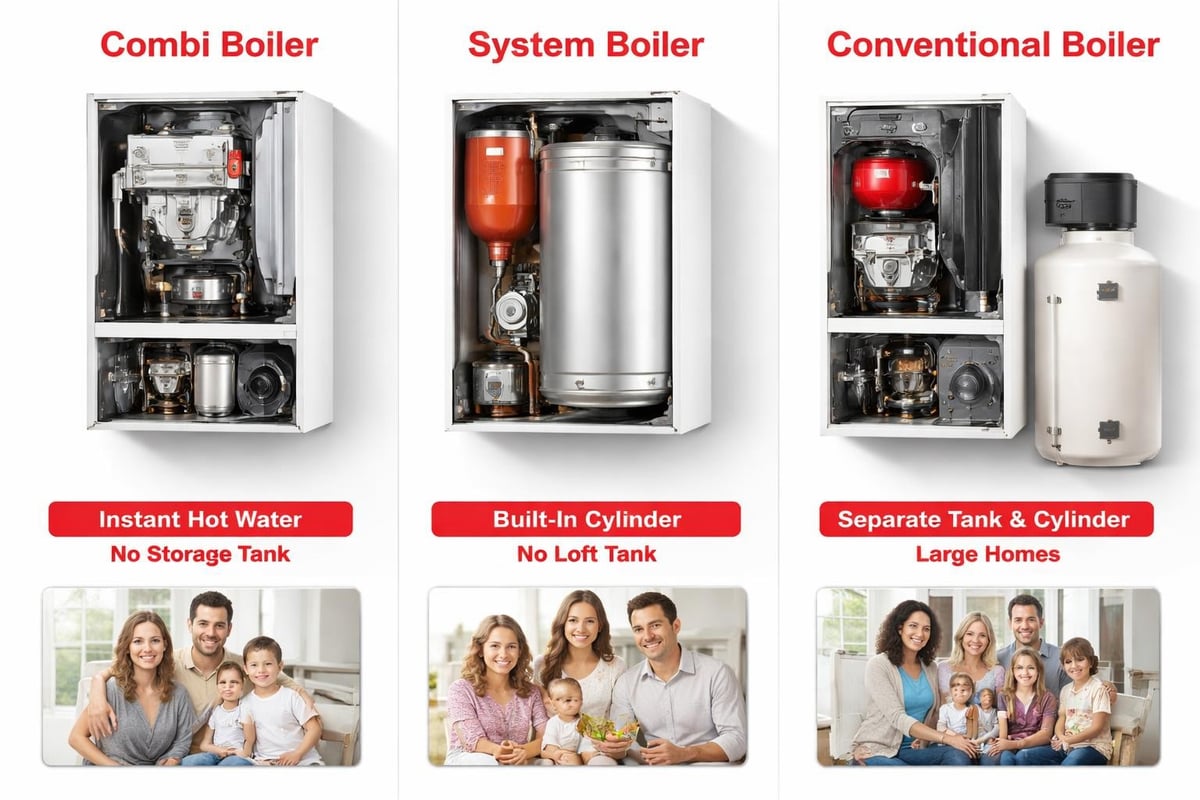
System Boilers: Balanced Performance
System boilers incorporate most heating components within the unit itself whilst requiring a separate hot water cylinder. This configuration suits medium to large homes where multiple taps or showers might run simultaneously.
| Feature | Combi Boiler | System Boiler | Conventional Boiler |
|---|---|---|---|
| Hot water storage | No | Yes (cylinder) | Yes (cylinder + tank) |
| Space required | Minimal | Moderate | Maximum |
| Multiple taps | Limited | Excellent | Excellent |
| Installation cost | £1,800-£3,500 | £2,200-£4,000 | £2,500-£4,500 |
| Best for | 1-2 bed homes | 3-4 bed homes | Large properties |
System boilers provide consistent water pressure to multiple outlets and can be paired with solar thermal systems for enhanced efficiency. When properly maintained, a quality boiler for gas of this type delivers reliable service for 15 years or more.
Conventional Boilers: Traditional Reliability
Also known as regular or heat-only boilers, conventional systems include separate hot water cylinders and cold water storage tanks. Whilst requiring more space, they remain the preferred choice for properties with traditional heating systems or those with low mains water pressure.
These boilers excel in homes with multiple bathrooms, allowing several people to use hot water simultaneously without pressure drops. Properties in rural Kent areas sometimes rely on conventional boilers where mains pressure proves insufficient for combi systems.
Selecting the Right Size Boiler for Gas Heating
Proper sizing represents a critical factor that many homeowners overlook when choosing a boiler for gas applications. An undersized unit struggles to meet heating demands, whilst an oversized boiler cycles inefficiently, wasting energy and money.
Calculating Your Heat Requirements
Professional heating engineers assess several factors to determine appropriate boiler capacity:
- Property size measured in square metres
- Number of radiators and their total output
- Insulation quality affecting heat retention
- Hot water demand based on bathrooms and occupants
- Radiator types and their efficiency ratings
A typical two-bedroom flat in Rochester might require a 24-28kW combi boiler, whilst a four-bedroom detached house in Gravesend could need 35kW or more. Professional boiler installation services include detailed heat loss calculations to ensure optimal sizing.
Understanding Boiler Efficiency Ratings
Modern condensing boilers for gas achieve remarkable efficiency levels, with A-rated models converting over 90% of fuel into usable heat. The ErP (Energy-related Products) directive requires all new boilers to display efficiency ratings from A+++ to G.
Efficiency improvements translate directly to savings:
- Upgrading from a G-rated boiler (70% efficient) to an A-rated model reduces fuel consumption by approximately 30%
- Annual savings of £300-£400 prove typical for average homes
- Reduced carbon emissions contribute to environmental goals
- Enhanced controls improve efficiency further through optimised operation
Investing in a high-efficiency boiler for gas heating pays dividends through lower running costs over the system's lifespan. Many homeowners find the initial premium recovered within five to seven years through energy savings alone.
Installation Considerations and Requirements
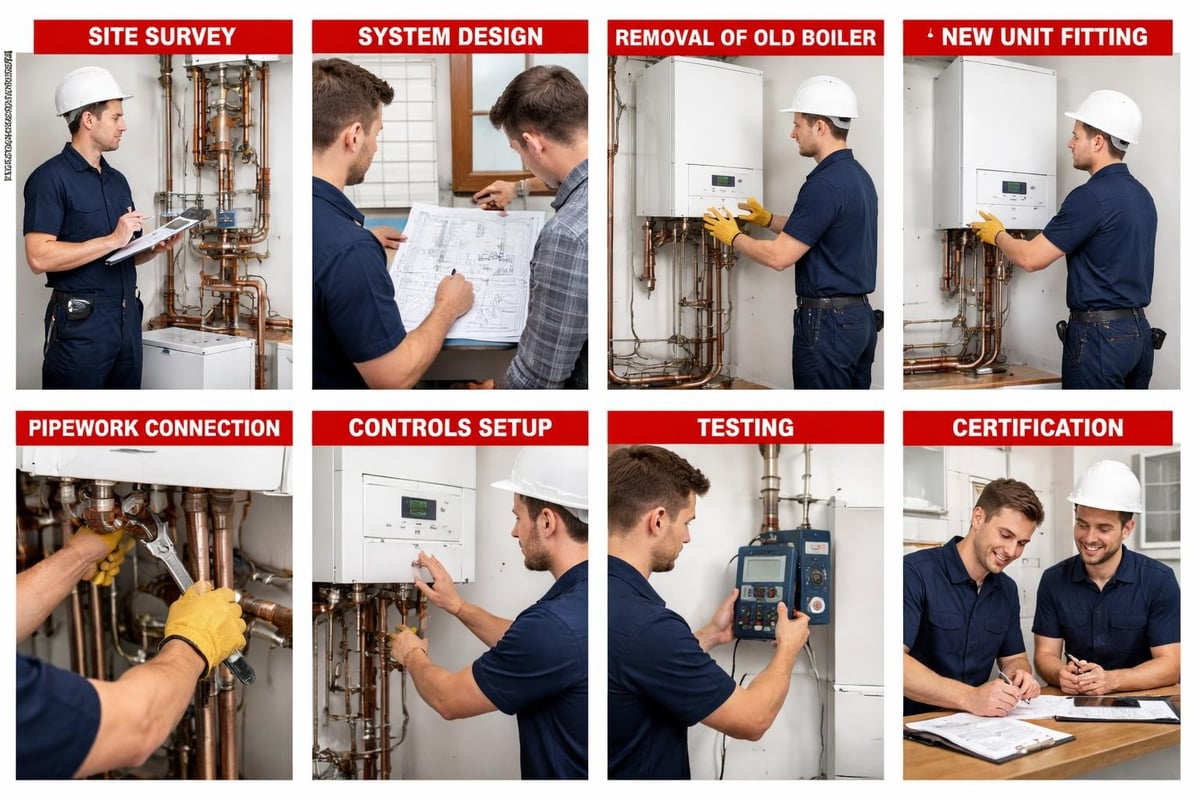
Installing a new boiler for gas systems involves more than simply swapping old for new. Modern regulations ensure safety, efficiency, and proper documentation of all work completed.
Gas Safe Registration: Non-Negotiable Requirement
By law, only Gas Safe registered engineers can legally install, service, or repair gas appliances in the UK. This registration protects homeowners by ensuring technicians possess verified competence and current knowledge of safety standards.
Before proceeding with any installation, verify your engineer's credentials through the Gas Safe Register website. Gas Safe registered engineers carry photographic ID cards showing their registration number and the appliance types they're qualified to work on.
Building Regulations Compliance
All boiler installations must comply with Part L of the Building Regulations, covering energy efficiency in buildings. Key requirements include:
- Installation of condensing boilers with minimum efficiency ratings
- Provision of appropriate controls including programmable thermostats and TRVs
- Proper flue positioning ensuring safe combustion gas dispersal
- Adequate ventilation for boiler operation
- Appropriate electrical supply and protection
Your installer provides a Building Regulations Compliance Certificate upon completion, confirming the installation meets all current standards. This documentation proves essential for property sales and insurance purposes.
Positioning and Flue Considerations
The location of your boiler for gas heating affects installation costs, efficiency, and aesthetic considerations. Common positions include:
Kitchen installations remain popular for combination boilers, offering proximity to hot water draw-off points and straightforward access for servicing. However, modern kitchen designs increasingly favour concealed locations.
Utility rooms and garages provide dedicated spaces away from living areas, though they require adequate frost protection and ventilation.
Loft installations maximise living space but demand careful planning for access, condensate drainage, and potential weight considerations.
Flue positioning must comply with strict regulations governing distances from windows, doors, air bricks, and boundary lines. Modern fan-assisted flues offer greater flexibility than natural draught systems, though they require electrical supply and careful noise consideration.
Maintaining Your Gas Boiler for Longevity
Regular maintenance extends the lifespan of your boiler for gas applications whilst ensuring safe, efficient operation throughout the year. Neglected systems deteriorate faster, consume more energy, and risk unexpected breakdowns during the coldest months.
Annual Servicing: Essential Investment
Professional annual servicing represents the single most important maintenance activity for gas boilers. During a comprehensive service, engineers perform numerous critical checks and adjustments.
A thorough boiler service typically includes:
- Combustion analysis to ensure efficient burning
- Gas pressure checks for correct supply
- Heat exchanger inspection for corrosion or blockages
- Flue integrity verification
- Safety device testing including overheat protection
- Controls calibration for optimal performance
- Condensate trap cleaning
- Case seal inspection
This comprehensive maintenance checklist from HVAC.com outlines the essential steps professionals follow during servicing, ensuring nothing gets overlooked.
Homeowner Maintenance Tasks
Between professional services, homeowners can perform simple checks to maintain their boiler for gas efficiency:
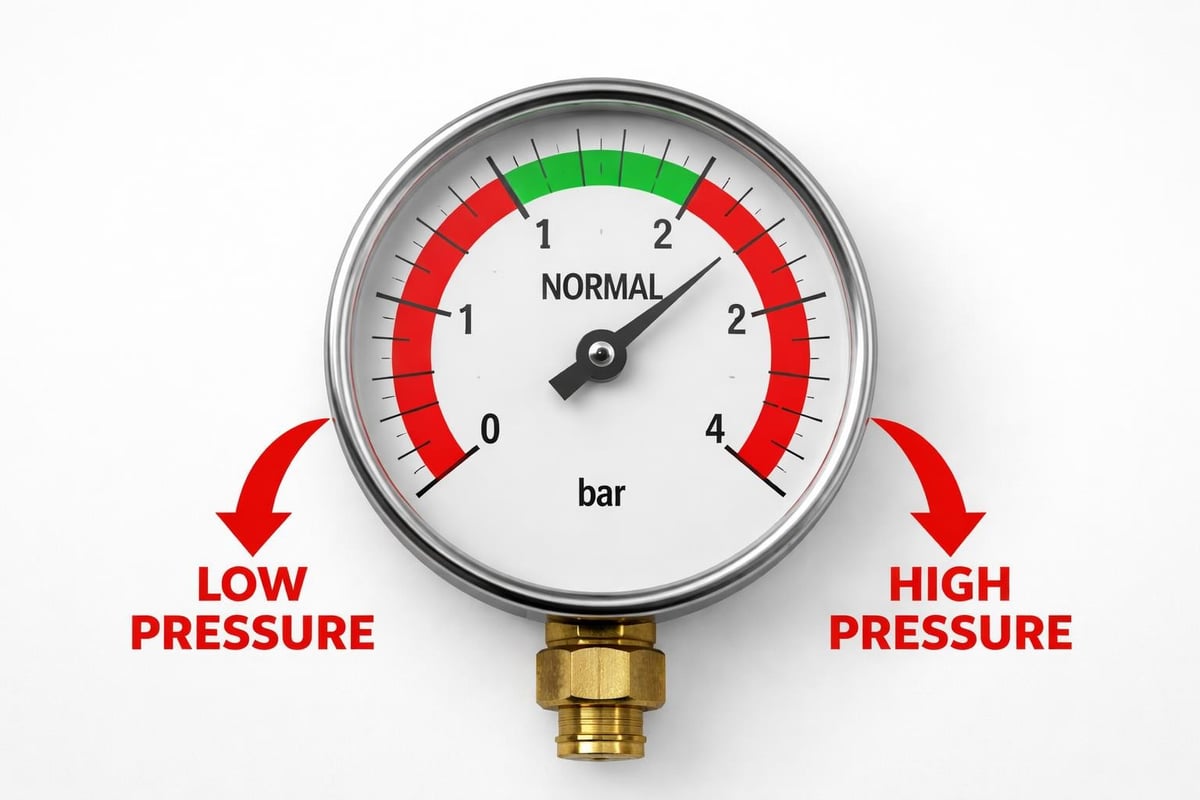
- Monitor boiler pressure monthly, topping up if below 1 bar
- Check for visible leaks around pipes and connections
- Listen for unusual noises indicating potential problems
- Verify radiator heating ensuring even warmth distribution
- Test hot water temperature confirming consistent output
These five practical tips for maintaining a healthy gas boiler help homeowners identify issues early, preventing minor problems from escalating into expensive repairs.
| Maintenance Task | Frequency | DIY or Professional |
|---|---|---|
| Pressure check | Monthly | DIY |
| Visual inspection | Monthly | DIY |
| Bleeding radiators | As needed | DIY |
| Full service | Annually | Professional |
| System flush | Every 5-10 years | Professional |
| Parts replacement | As required | Professional |
System Flushing and Cleanliness
Heating system cleanliness significantly impacts boiler for gas efficiency and longevity. Over time, sludge, rust, and limescale accumulate within pipes and radiators, restricting water flow and forcing the boiler to work harder.
Powerflushing services use specialist equipment to circulate cleaning chemicals through the system at high velocity, dislodging accumulated debris. This process typically recovers 10-15% efficiency on neglected systems whilst extending component lifespan considerably.
Installing a magnetic filter captures metallic particles before they circulate through your boiler for gas heating, protecting the heat exchanger from premature failure. These relatively inexpensive devices save substantially on future repair costs.
Upgrading Controls for Enhanced Efficiency
Modern heating controls transform how your boiler for gas operates, delivering comfort whilst minimising energy waste through intelligent automation and responsive temperature management.
Smart Thermostats and Zoning
Smart heating controls represent one of the most cost-effective upgrades for existing boiler systems. These devices learn household routines, adjust temperatures based on occupancy, and allow remote control via smartphone applications.
Benefits of upgrading to smart controls include:
- Reduced energy consumption through optimised heating schedules
- Zone control directing heat only where needed
- Weather compensation adjusting output for external conditions
- Usage insights highlighting opportunities for further savings
- Integration with other smart home systems
Smart heating control installations typically pay for themselves within two to three years through reduced energy bills, whilst simultaneously improving comfort through more precise temperature management.
Thermostatic Radiator Valves
TRVs allow individual room temperature control, preventing waste in rarely used spaces whilst maintaining comfort in occupied areas. Modern electronic TRVs offer programmable schedules for different rooms, maximising the flexibility of your boiler for gas heating system.
Installing TRVs throughout your property ensures Building Regulations compliance for new boiler installations whilst delivering year-round efficiency improvements for existing systems.
Troubleshooting Common Gas Boiler Issues
Understanding typical problems helps homeowners respond appropriately when their boiler for gas heating develops faults, distinguishing between simple fixes and issues requiring professional attention.
Low Pressure Problems
Boiler pressure dropping below 1 bar represents the most common issue homeowners encounter. This usually results from small leaks, bleeding radiators, or natural system water loss over time.
Repressurising procedure:
- Ensure the boiler is switched off and cooled
- Locate the filling loop (usually beneath the boiler)
- Open both filling loop valves slowly
- Watch the pressure gauge, closing valves when reaching 1.5 bar
- Check for leaks around the filling loop connection
- Restart the boiler and verify normal operation
Frequent pressure loss indicates a leak somewhere in the system requiring professional investigation. Never repeatedly top up without identifying the underlying cause.
Ignition Failures
When a boiler for gas fails to ignite, several potential causes exist. Modern boilers display error codes indicating specific faults, though some issues share similar symptoms.
Common ignition problems include:
- Gas supply interruptions or isolation valve closure
- Electrode failure preventing spark generation
- Blocked burner jets restricting gas flow
- Faulty gas valve preventing fuel delivery
- Air in gas lines after supply interruption
Whilst homeowners can check gas supply and ensure isolation valves are open, most ignition issues require professional diagnosis and repair. These common boiler problems often need specialist tools and expertise for safe resolution.
Noisy Operation
Unusual sounds from your boiler for gas heating system indicate various potential issues, each with different implications for urgency and required action.
Kettling produces rumbling or whistling sounds caused by limescale buildup on the heat exchanger. This restricts water flow, creating localised boiling and steam formation. Professional descaling or heat exchanger replacement resolves this issue.
Banging or clunking often indicates air trapped in the system or incorrectly sized circulation pumps. Bleeding radiators may help, though persistent noise warrants professional investigation.
Gurgling sounds typically suggest air in the system or low water pressure. These usually resolve through bleeding radiators and checking system pressure.
Financial Considerations and Available Support
Investing in a new boiler for gas heating represents a significant expenditure, though various schemes and financing options make upgrades more accessible for Kent homeowners.
Installation Costs and Price Factors
New boiler costs vary considerably based on several factors:
| Cost Factor | Impact on Price |
|---|---|
| Boiler type (combi/system/conventional) | £800-£2,500 |
| Brand and model | £500-£1,500 |
| Output capacity | £200-£800 |
| Warranty length | £100-£400 |
| Installation complexity | £500-£2,000 |
| Additional materials | £200-£800 |
| Total typical range | £1,800-£4,500 |
Straightforward combi boiler replacements in accessible locations cost less than complex system conversions or installations in difficult positions. Obtaining multiple quotes ensures competitive pricing, though the cheapest option rarely proves the best long-term value.
Financing Options
Spreading the cost of a new boiler for gas heating makes upgrades more manageable for many households. Finance options include interest-free credit, low-rate loans, and flexible payment plans allowing monthly instalments over several years.
Consider the total cost including interest when evaluating finance, ensuring monthly payments fit comfortably within household budgets. Some manufacturers offer extended warranties when purchasing through approved finance schemes, adding value beyond simple payment flexibility.
Government Grants and Schemes
Various government initiatives support boiler upgrades and energy efficiency improvements, particularly for vulnerable households and those on qualifying benefits.
The Boiler Upgrade Scheme provides grants for low-carbon heating systems, though gas boilers don't currently qualify. However, combination upgrades incorporating renewable technologies may access partial funding for associated work.
Energy Company Obligation (ECO4) schemes help eligible households access free or subsidised boiler replacements when existing systems prove inefficient or unsafe. Local authorities in Kent can provide information about current qualifying criteria and available support.
Environmental Considerations and Future-Proofing
Selecting a boiler for gas heating in 2026 requires consideration of evolving environmental regulations and the future of domestic heating as the UK progresses toward net-zero carbon emissions targets.
Hydrogen-Ready Boilers
The government's hydrogen strategy envisions converting natural gas networks to hydrogen fuel, potentially allowing existing boiler infrastructure to continue with modifications. Several manufacturers now produce "hydrogen-ready" boilers designed for straightforward conversion when hydrogen supply becomes available.
Whilst widespread hydrogen conversion remains years away, choosing hydrogen-ready equipment when replacing your boiler for gas heating provides future-proofing against potential obsolescence of natural gas systems.
Hybrid Systems
Combining a gas boiler with renewable technology creates hybrid heating systems offering efficiency, flexibility, and reduced environmental impact. Common configurations pair a boiler for gas with air source heat pumps or solar thermal panels.
These systems use renewable energy when conditions allow, automatically switching to gas when demand exceeds renewable capacity or during peak efficiency periods. Hybrid installations reduce carbon emissions by 20-40% compared to gas-only systems whilst maintaining the reliability and responsiveness homeowners expect.
System Efficiency Optimisation
Maximising efficiency from your existing boiler for gas delivers immediate environmental benefits whilst reducing running costs:
- Lower flow temperatures (50-60°C) reduce heat loss and improve condensing efficiency
- Weather compensation adjusts output for actual conditions rather than fixed schedules
- Load compensation matches heating delivery to actual demand
- Proper insulation reduces heat loss requiring less boiler operation
- Regular maintenance ensures optimal combustion and minimal waste
These six ways to take care of boilers at home emphasise practical steps every homeowner can implement for improved efficiency and longevity.
Choosing a Reputable Installation Company
The quality of installation fundamentally affects how well your boiler for gas performs, its reliability, and its lifespan. Selecting experienced, qualified professionals ensures proper system design, installation, and ongoing support.
Verification and Credentials
Before engaging any installer, verify their credentials thoroughly:
- Gas Safe registration confirming legal qualification to work on gas appliances
- Manufacturer accreditation demonstrating product-specific training and expertise
- Insurance coverage protecting against potential installation issues
- Professional memberships indicating industry standing and standards adherence
- Customer reviews revealing service quality and reliability
Reputable companies willingly provide evidence of qualifications and connect prospective customers with previous clients. Castle Heating Kent's customer reviews demonstrate the quality and satisfaction levels achievable from experienced professionals.
Quotation Comparison
Obtaining multiple detailed quotations helps identify fair pricing whilst revealing differences in proposed solutions. Comprehensive quotes specify:
- Exact boiler model and specifications
- All materials and components included
- Labour costs and anticipated timeframe
- Warranty terms for equipment and installation
- Scope of work including any building alterations
- System flushing or additional treatments recommended
Beware of quotes significantly below market rates, as these often indicate compromised quality, shortcuts, or hidden additional costs emerging during installation. Value represents the optimal balance of quality, service, and price rather than simply the lowest initial cost.
Post-Installation Support
Quality installation companies provide comprehensive aftercare supporting your boiler for gas throughout its operational life. This includes clear documentation, warranty registration, usage guidance, and responsive service when issues arise.
Establishing a relationship with your installer for ongoing servicing ensures consistency of care and familiarity with your specific system configuration. Annual service reminders, priority breakdown response, and preferential rates for existing customers demonstrate commitment to long-term customer relationships beyond the initial sale.
Understanding the options, requirements, and maintenance needs for a boiler for gas ensures Kent homeowners make informed decisions delivering efficiency, reliability, and value for years to come. Whether you're considering a straightforward replacement or exploring advanced control options, professional guidance tailored to your specific property and requirements proves invaluable. For expert advice and professional installation backed by over a decade of experience serving Rochester, Gravesend, and surrounding areas, Castle Heating Kent offers comprehensive boiler services from Gas Safe registered engineers committed to quality and customer satisfaction.

