
Both Toilets Clogged: Expert Solutions for Kent Homes
When both toilets clogged simultaneously in your home, it's far more than a minor inconvenience. This scenario indicates a potentially serious plumbing issue that requires immediate attention and a systematic approach to diagnosis and resolution. Unlike a single blocked toilet, which typically points to a localised problem, multiple fixtures experiencing blockages at the same time often signal deeper issues within your property's drainage infrastructure. Understanding the underlying causes and knowing when to attempt DIY solutions versus calling professional help can save Kent homeowners significant time, money, and stress.
Understanding Why Both Toilets Become Clogged Simultaneously
The simultaneous clogging of multiple toilets rarely occurs by coincidence. When both toilets clogged at once, the root cause typically lies beyond the individual fixtures themselves. The most common culprit is a blockage in the main sewer line, which serves as the central drainage pathway for all wastewater leaving your property. This main line collects waste from every fixture in your home-toilets, sinks, showers, and washing machines-and channels it either to the municipal sewer system or your septic tank.
A main sewer line blockage prevents waste from flowing freely away from your home. As waste accumulates at the blockage point, it begins backing up through the lowest drainage points in your property. Toilets, being directly connected to the main waste stack and positioned at low points, are often the first fixtures to show symptoms.
Primary Causes of Main Line Blockages
Several factors contribute to main sewer line obstructions that result in both toilets becoming clogged. Tree root infiltration ranks amongst the most prevalent causes, particularly in established Kent properties with mature gardens. Roots naturally seek water sources and can penetrate even small cracks in sewer pipes, gradually expanding and creating significant blockages.
Additional causes include:
- Accumulated debris: Years of flushed materials, grease, and soap residue building up along pipe walls
- Collapsed or damaged pipes: Aging clay or cast iron pipes that have deteriorated or shifted
- Foreign objects: Items accidentally flushed that become lodged in pipe junctions
- Structural issues: Ground settlement or construction work affecting pipe alignment
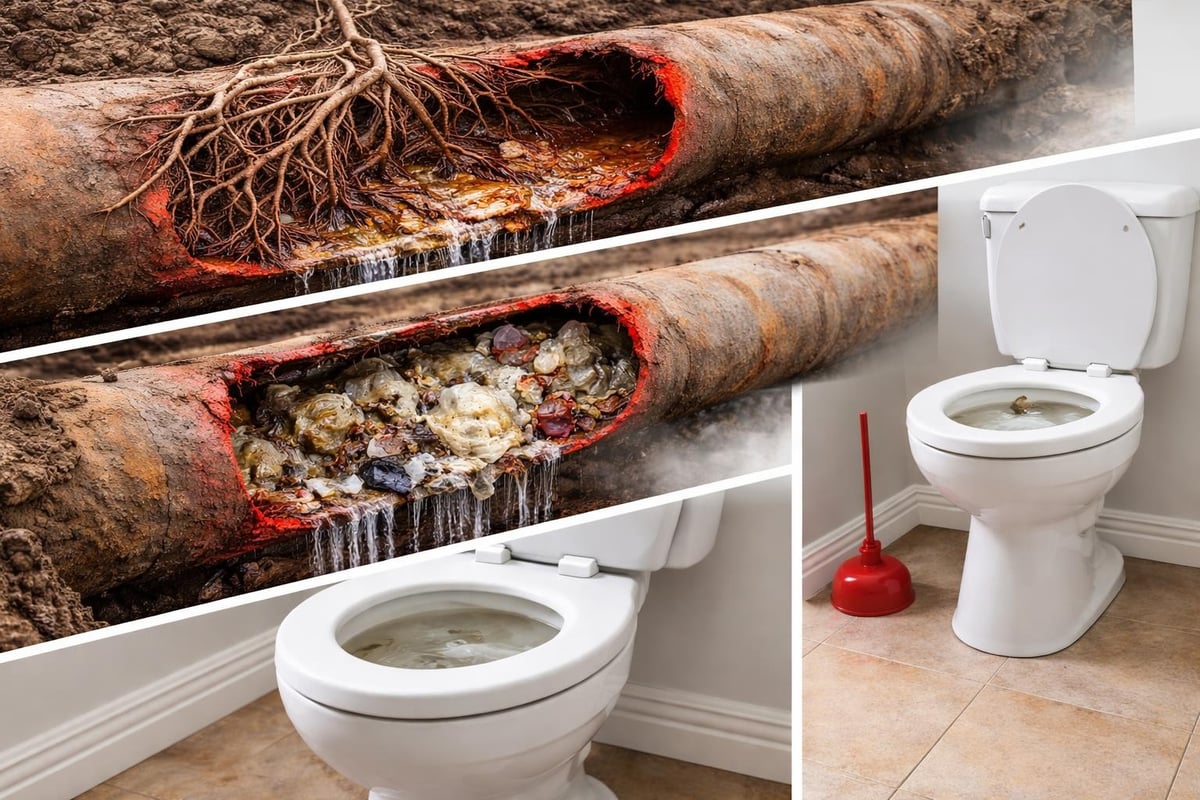
Diagnosing the Problem When Both Toilets Clogged
Before calling a professional, homeowners can perform several diagnostic checks to understand the severity and location of the blockage. Start by testing other fixtures throughout your property. If water drains slowly from multiple sinks, the shower backing up, or gurgling sounds emerge from various drains when you flush either toilet, these symptoms strongly indicate a main line issue rather than isolated toilet problems.
Pay attention to which floor exhibits symptoms first. According to research on multi-level toilet clogs, blockages in the main sewer line typically affect downstairs toilets first, as waste from upper floors can still drain to the blockage point before encountering resistance. If upstairs toilets flush normally whilst downstairs ones remain clogged, the obstruction likely sits beyond the ground floor connection point.
Check for external warning signs around your property. Soggy patches in the garden, especially near sewer line routes, foul odours emanating from drains, or visible sewage backing up from outdoor inspection chambers all point toward serious drainage issues requiring immediate professional attention.
Testing Drainage Patterns
Create a systematic testing approach by following these numbered steps:
- Flush one toilet and observe whether both toilets experience rising water levels
- Run water in upstairs sinks for several minutes whilst monitoring downstairs drains
- Check all shower drains for slow drainage or gurgling noises
- Test washing machine drainage during a complete cycle
- Inspect outdoor drains and manholes for standing water or debris
Recording your observations helps plumbing professionals diagnose the issue more efficiently when they arrive.
Immediate Actions When Both Toilets Clogged
When facing both toilets clogged, swift action prevents the situation from deteriorating further. First, cease using all plumbing fixtures immediately. Every gallon of water introduced into your drainage system has nowhere to go and will exacerbate backing up issues. Inform all household members to avoid flushing toilets, running taps, using showers, or operating washing machines and dishwashers.
Locate your main water shut-off valve and be prepared to close it if water levels in toilets continue rising despite no active use. This valve typically sits near your water meter, either inside near the front of your property or in an external boundary box. Knowing its location before emergencies arise proves invaluable.
For homeowners comfortable with basic plumbing, attempting to clear the main clean-out access point might resolve simpler blockages. The main clean-out is typically a capped pipe fitting located outside your property or in the basement, providing direct access to the main sewer line. Opening this access point (whilst wearing protective equipment) allows you to inspect for obvious blockages or insert a plumbing snake.
Warning: Only attempt clean-out access if you're confident in your abilities. Improper handling can result in sewage exposure or further damage to your plumbing system.
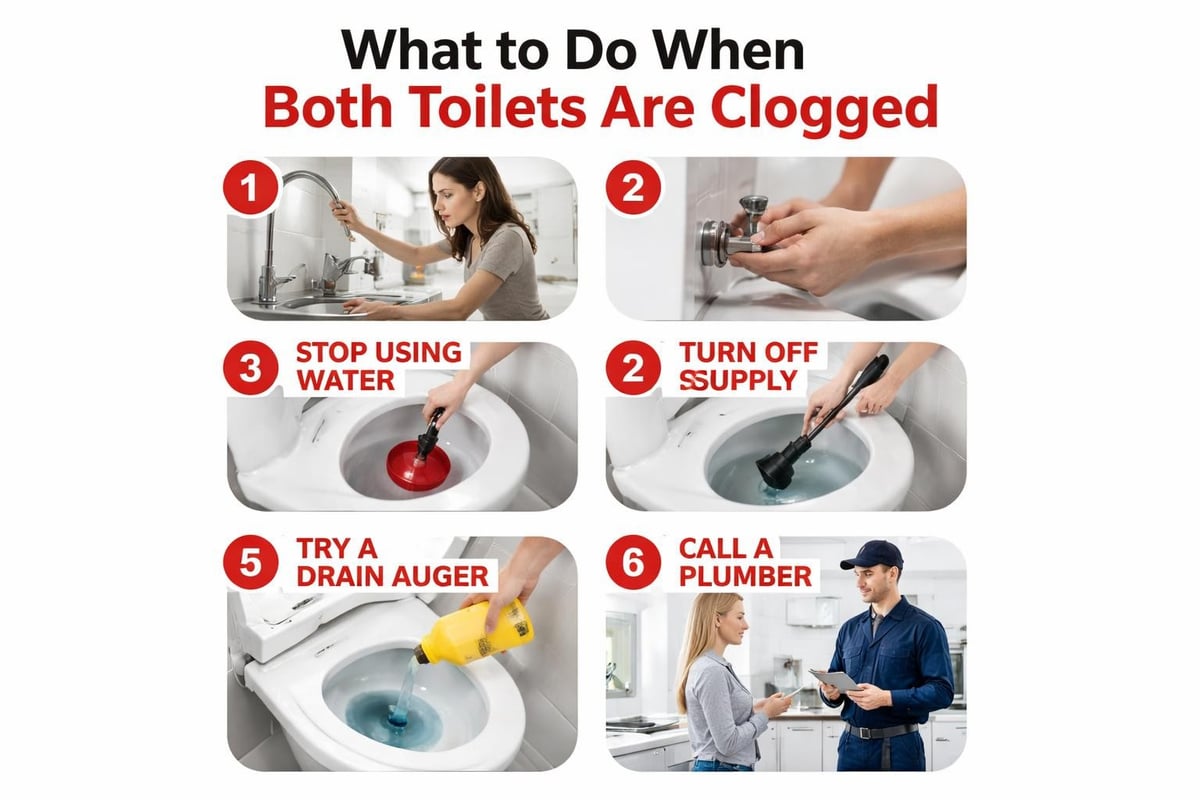
Professional Solutions for Both Toilets Clogged
Understanding why toilets and other fixtures clog simultaneously requires professional expertise and specialised equipment. Castle Heating Kent's experienced plumbers utilise advanced diagnostic tools to identify blockage locations and causes without guesswork. CCTV drain surveys involve threading a waterproof camera through your drainage system, providing real-time visual inspection of pipe interiors, identifying blockages, damage, or structural issues.
Professional drain clearance methods vary depending on the blockage type and severity:
| Method | Best For | Typical Duration | Effectiveness |
|---|---|---|---|
| High-pressure jetting | Grease, debris, minor roots | 1-2 hours | 95% success rate |
| Mechanical rodding | Solid obstructions | 30-60 minutes | 85% success rate |
| Root cutting | Tree root infiltration | 2-3 hours | 90% success rate |
| Pipe relining | Damaged pipe sections | 4-6 hours | Long-term solution |
High-pressure water jetting represents the gold standard for clearing main sewer line blockages. This technique uses specialised equipment to blast water at pressures exceeding 3,000 PSI through your pipes, effectively scouring away accumulated debris, breaking up obstructions, and even cutting through tree roots. The method not only clears blockages but also cleans pipe interiors, reducing the likelihood of recurring issues.
When both toilets clogged due to collapsed or severely damaged pipes, excavation and replacement might be necessary. Modern trenchless technologies, however, allow pipe relining without extensive digging. This process involves inserting a resin-coated liner into existing pipes, which hardens to create a new pipe within the old one, restoring full functionality with minimal property disruption.
Cost Considerations and Prevention
Professional drain clearance costs vary based on blockage severity, accessibility, and required methods. Basic rodding services typically start around £80-£150, whilst comprehensive CCTV surveys and high-pressure jetting range from £200-£400. Emergency call-outs outside regular business hours naturally incur premium rates.
Investing in preventative maintenance proves far more economical than reactive repairs. Annual drain inspections identify developing issues before they cause both toilets to become clogged, allowing scheduled interventions at convenient times rather than emergency situations.
Common Mistakes That Worsen the Situation
When confronting both toilets clogged, homeowners often inadvertently compound the problem through well-intentioned but misguided actions. Chemical drain cleaners, heavily marketed for blockage clearance, present significant risks for main line issues. These caustic substances can damage pipes, particularly older cast iron or clay systems, and prove ineffective against substantial main line blockages. Worse still, if chemical cleaners fail to clear the blockage, they create hazardous conditions for professional plumbers who must work with contaminated water.
Excessive plunging when both toilets clogged wastes effort and potentially damages toilet seals. A plunger cannot generate sufficient pressure to clear main sewer line blockages located metres away from the fixture. Vigorous plunging might temporarily push water past a partial blockage, creating the illusion of success, but the underlying obstruction remains and will cause recurring problems within days or even hours.
Attempting to use household items like coat hangers or improvised tools to clear toilets risks damaging the porcelain trap or scratching the bowl surface. Professional guidance on persistent clogs emphasises that proper tools and techniques make the difference between successful clearance and costly damage.
Some homeowners continue using fixtures whilst waiting for professional help, reasoning that "it's already clogged, so a bit more won't matter." This approach dramatically worsens the situation, potentially causing sewage to back up into showers, sinks, or even flood living spaces, creating health hazards and requiring extensive cleanup beyond simple drain clearance.
Preventative Measures to Avoid Both Toilets Becoming Clogged
Proactive drainage care significantly reduces the likelihood of experiencing both toilets clogged simultaneously. Understanding what belongs in toilets versus what belongs in bins forms the foundation of prevention. Even products marketed as "flushable," including many wet wipes, fail to break down sufficiently in drainage systems and contribute to blockages over time.
Items Never to Flush
Educate all household members about proper toilet use. These items should never enter your drainage system:
- Wet wipes, facial tissues, and paper towels
- Cotton wool, cotton buds, and dental floss
- Sanitary products, nappies, and incontinence pads
- Cooking oils, fats, and grease
- Medication, cigarette ends, and chemical products
- Cat litter, even varieties labelled as flushable
Reducing toilet paper usage to reasonable amounts per flush also helps. Whilst toilet paper is designed to disintegrate, excessive quantities in a single flush can accumulate at pipe junctions or partial blockages, gradually worsening the restriction.
Regular professional drain inspections, ideally conducted annually, identify developing issues before they escalate. For properties with mature trees near sewer lines or homes built before 1970 (when clay pipes were standard), biennial CCTV surveys represent prudent investments.
| Preventative Action | Frequency | Cost Range | Benefit |
|---|---|---|---|
| Professional drain survey | Annually | £150-£250 | Early problem detection |
| Enzyme drain treatments | Monthly | £10-£15 | Organic matter breakdown |
| External drain cleaning | Quarterly | DIY/£50-£80 | Debris removal |
| Tree root barrier installation | One-time | £300-£600 | Long-term root prevention |
For Kent homeowners concerned about plumbing maintenance costs, solutions exist to manage expenses whilst maintaining property systems. Whether addressing both toilets clogged or planning preventative care, budgeting tools help homeowners protect their properties without financial strain.

Distinguishing Between Main Line and Individual Toilet Issues
Not every instance of multiple clogged toilets indicates main sewer line problems. Understanding the distinctions helps homeowners respond appropriately. When both toilets clogged but other fixtures drain normally, the issue might involve shared waste stacks rather than the main sewer line. In multi-storey properties, toilets often connect to common vertical waste pipes before joining the main drainage system.
Diagnostic approaches for frequent toilet clogs reveal that individual toilet issues typically present different symptoms than main line blockages. If one toilet clogs repeatedly whilst the other functions normally, then suddenly both experience problems, the first toilet's recurring issue might have progressed to affect shared drainage.
Low-flow toilets, whilst water-efficient, sometimes struggle to generate sufficient pressure to move waste through older drainage systems designed for higher-volume fixtures. Properties with both toilets upgraded to low-flow models but retaining original pipework occasionally experience simultaneous drainage issues not caused by blockages but by inadequate flow dynamics.
Hard water areas throughout Kent can suffer from limescale accumulation within drainage pipes, gradually restricting flow capacity. Unlike sudden blockages caused by foreign objects, mineral buildup develops slowly over years, eventually reaching thresholds where both toilets clogged becomes possible during peak usage periods.
Age-Related Plumbing Considerations
Properties built before 1980 commonly feature drainage systems with inherent vulnerabilities:
- Cast iron pipes: Corrode internally, creating rough surfaces that catch debris
- Clay pipes: Develop cracks allowing root infiltration and soil entry
- Pitch fibre pipes: Collapse or deform over time, restricting flow
- Shared waste stacks: Multiple fixtures converging at single points create bottlenecks
Understanding your property's plumbing age and materials helps anticipate potential issues and implement appropriate preventative measures.
When to Call Emergency Plumbing Services
Certain situations demand immediate professional intervention rather than DIY attempts or scheduled appointments. When both toilets clogged and sewage backs up into showers, bathtubs, or sinks, you're experiencing a plumbing emergency requiring urgent response. This scenario indicates complete main line blockage with nowhere for waste to drain except back into your property.
Foul sewage odours permeating living spaces signal dangerous conditions. Raw sewage contains harmful bacteria, viruses, and parasites that pose serious health risks, particularly to children, elderly individuals, and those with compromised immune systems. Professional plumbers arrive equipped with proper protective equipment and sanitisation tools to address these hazardous situations safely.
Visible sewage overflow in your garden, especially near property boundaries or paved areas, suggests main sewer line failure. This situation not only affects your property but potentially impacts neighbouring homes and public health. Expert insights on what causes clogged toilets emphasise that external sewage evidence requires immediate professional assessment and often coordination with local water authorities.
Properties served by septic systems face unique emergency criteria. When both toilets clogged in septic-served homes, the issue might indicate tank capacity problems, drain field failure, or distribution box blockages rather than pipe obstructions. Septic emergencies can escalate rapidly, causing environmental contamination and expensive remediation requirements.
Castle Heating Kent provides comprehensive drainage services throughout Rochester, Gravesend, and surrounding Kent areas, with emergency response capabilities for urgent situations. Their Gas Safe registered engineers bring over two decades of combined experience to residential and small commercial plumbing challenges.
Understanding Drainage System Components
Effective resolution when both toilets clogged requires basic knowledge of residential drainage architecture. Your property's drainage system comprises several interconnected components, each serving specific functions. Waste pipes from individual fixtures (toilets, sinks, showers) connect to branch lines, which in turn feed into soil stacks-vertical pipes that channel waste downward and provide ventilation upward through roof vents.
Soil stacks connect to underground drainage pipes at the property's base, creating the main waste line that carries all sewage away from your home. Inspection chambers (manholes) positioned at strategic points along this route allow access for maintenance and clearance. Understanding this layout helps when describing symptoms to plumbers and identifying potential blockage locations.
Vent pipes play crucial roles often overlooked until problems arise. These vertical extensions of the waste system allow air into drainage pipes, preventing vacuum formation that would slow or stop waste flow. Blocked vent pipes can create symptoms mimicking both toilets clogged situations, with slow drainage and gurgling sounds throughout the system. However, vent blockages typically worsen gradually rather than causing sudden simultaneous clogs.
The trap beneath each toilet contains standing water that seals against sewer gases entering your home. When main line blockages occur, this water can be pushed upward, creating bubbling effects or even overflowing. Conversely, severe blockages might create sufficient vacuum to suck trap water away, allowing foul odours to enter living spaces even before actual backup occurs.
Regional Considerations for Kent Properties
Kent properties face unique drainage challenges influenced by local geology, property age distribution, and environmental factors. The region's clay-heavy soil, particularly in Rochester and Gravesend areas, expands during wet periods and contracts during dry spells. This movement stresses underground pipes, creating cracks that facilitate root infiltration and structural failures leading to both toilets becoming clogged.
Victorian and Edwardian properties remain common throughout Kent, many retaining original clay drainage systems installed over a century ago. These systems, whilst remarkably durable, have reached or exceeded their design life expectancy. Homeowners of period properties should prioritise regular drainage assessments as part of ongoing maintenance programmes.
Tree species prevalent in Kent gardens-including willows, poplars, and various oak varieties-possess particularly aggressive root systems that seek water sources. Properties with these trees within 10 metres of sewer lines face elevated risks of root-related blockages. Professional plumbers familiar with regional conditions can provide targeted advice for specific property circumstances.
Modern developments in Kent typically feature plastic (PVC or PVCu) drainage systems that resist corrosion and root penetration more effectively than traditional materials. However, even these systems aren't immune to blockages caused by inappropriate items being flushed or structural issues from ground movement.
Long-Term Solutions Beyond Emergency Clearance
After resolving immediate issues when both toilets clogged, homeowners should consider long-term improvements preventing recurrence. Depending on diagnostic findings, several options exist. For properties with recurring root infiltration, installing physical root barriers alongside sewer lines creates protective zones preventing future penetration. These barriers, typically made from slow-release herbicides or physical copper sheets, redirect roots away from vulnerable pipes.
Properties with aging drainage infrastructure benefit from proactive replacement rather than reactive repairs. Modern trenchless pipe replacement techniques minimise property disruption whilst providing decades of trouble-free service. This investment, whilst initially substantial (typically £3,000-£8,000 depending on property size and access), eliminates recurring emergency call-out costs and prevents property damage from future sewage backups.
Regular professional maintenance contracts offer peace of mind and cost predictability. Annual inspections, preventative treatments, and priority emergency response typically cost £150-£300 annually, far less than single emergency interventions when both toilets clogged create urgent situations requiring immediate resolution.
Experiencing both toilets clogged simultaneously signals serious drainage issues requiring prompt, professional attention to prevent health hazards and property damage. Understanding the causes, implementing preventative measures, and knowing when to call experts rather than attempting DIY solutions protects Kent homeowners from escalating problems and excessive costs. Whether you're facing an emergency situation or seeking to prevent future drainage issues, Castle Heating Kent offers comprehensive plumbing and drainage services throughout Rochester, Gravesend, and surrounding areas, backed by Gas Safe registered engineers and over 20 years of professional experience serving domestic properties across the region.

