
Gas Boiler Cost Guide: Installation & Running Expenses
Understanding the financial commitment involved in purchasing and installing a new gas boiler is essential for homeowners planning a heating system upgrade. The gas boiler cost encompasses not only the initial purchase price but also installation labour, potential pipework modifications, and long-term operational expenses. For property owners in Kent and surrounding areas, making an informed decision about heating investments requires a thorough examination of all cost components, from the unit itself to annual servicing requirements.
Initial Purchase Price and Unit Costs
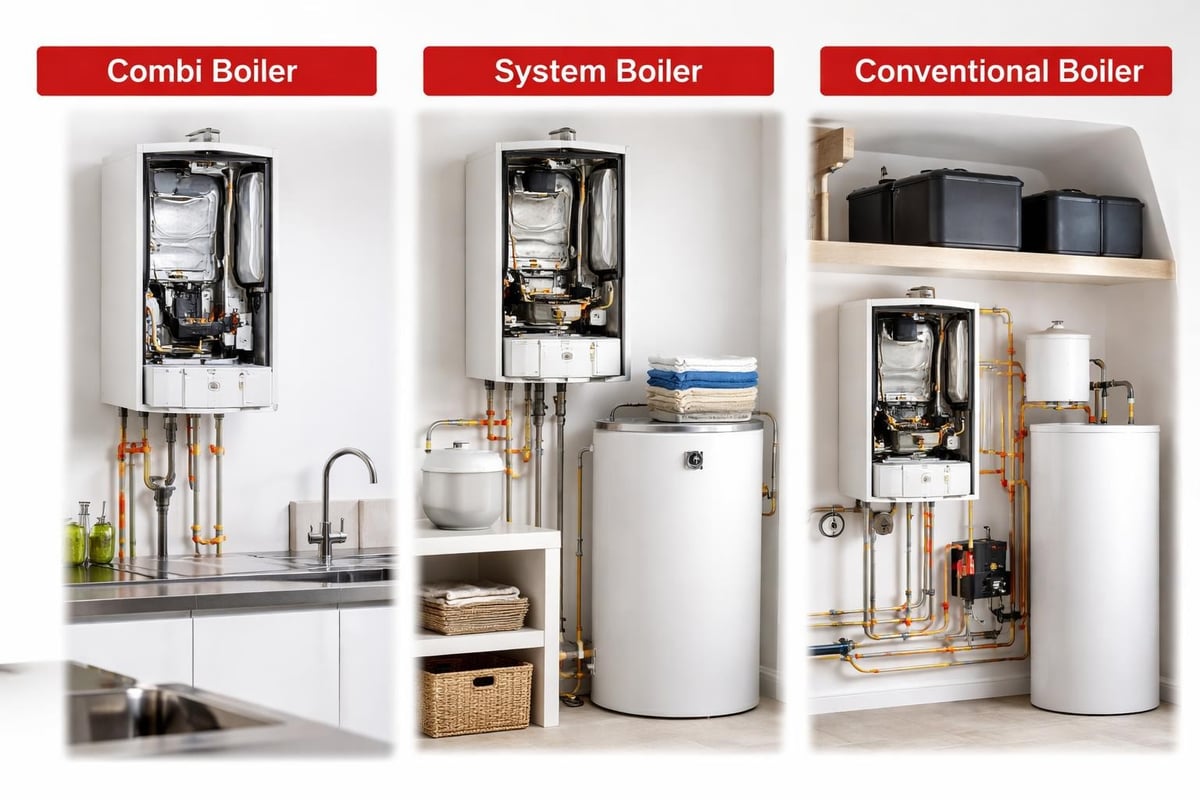
The gas boiler cost varies significantly depending on the type of system you select. Combi boilers, which provide both heating and hot water on demand without requiring a separate cylinder, typically range from £650 to £2,500 for the unit alone. System boilers, which work with a separate hot water cylinder but don't need a cold water tank, generally cost between £800 and £2,800. Conventional boilers, suitable for larger properties with existing traditional heating systems, can range from £900 to £3,000.
Brand reputation and manufacturing quality play substantial roles in pricing. Premium manufacturers with established track records command higher prices, but often deliver superior reliability and longer warranties. When considering boiler installation, homeowners should evaluate the balance between upfront costs and potential long-term savings through improved efficiency.
Key factors influencing unit prices include:
- Boiler output capacity (measured in kilowatts)
- Energy efficiency ratings (A-rated boilers cost more initially)
- Brand reputation and warranty coverage
- Additional features such as weather compensation and smart controls
- Modulation capability for precise temperature control
The comprehensive breakdown of gas boiler costs demonstrates how efficiency ratings directly impact pricing, with high-efficiency condensing boilers representing the current market standard in the UK.
Installation Labour and Professional Fees
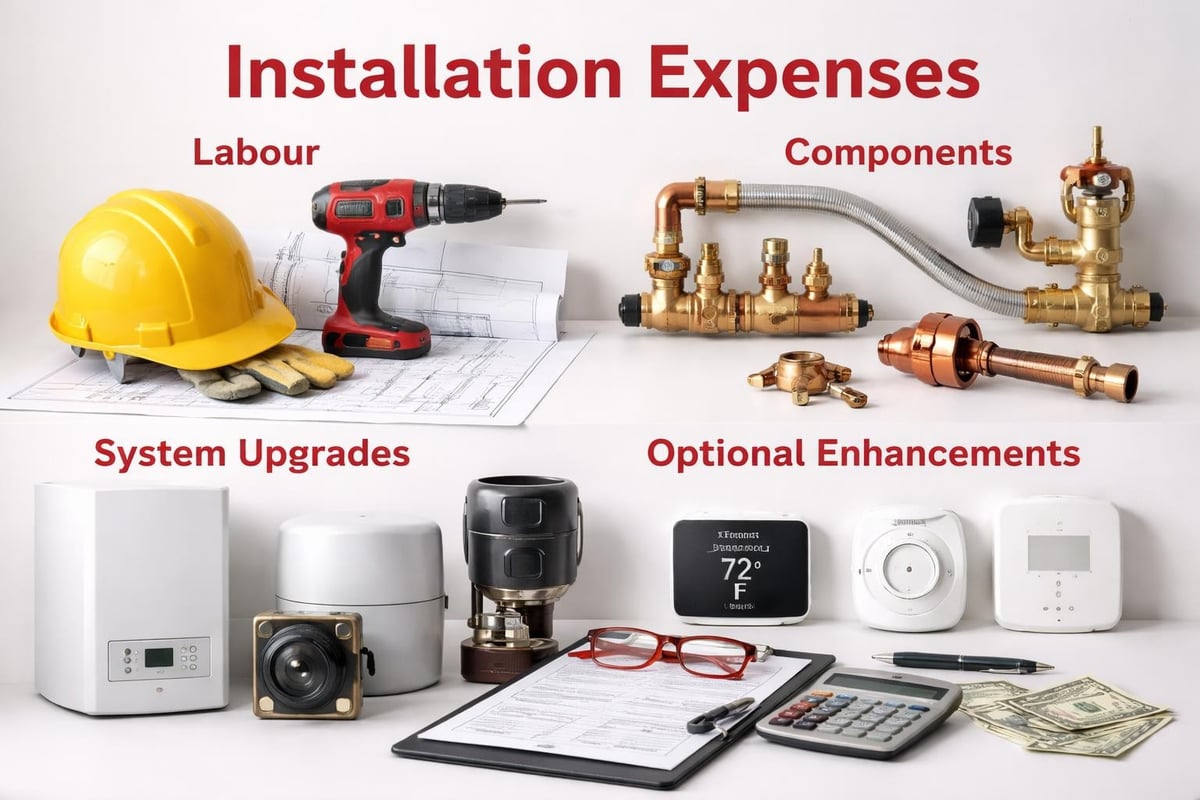
Installation costs represent a significant portion of the total gas boiler cost. Professional fitting by Gas Safe registered engineers typically ranges from £500 to £1,500, though complex installations can exceed £2,000. The final labour charge depends on several variables, including the installation's complexity, accessibility of the boiler location, and whether existing pipework requires modification or replacement.
Standard Installation Scenarios
A straightforward like-for-like replacement, where the new boiler occupies the same position as the old unit and connects to existing pipework, represents the most economical installation option. These installations typically take one to two days and fall at the lower end of the labour cost spectrum.
Relocating a boiler to a different room or floor increases expenses considerably. New pipework runs, flue extensions, and potential building modifications all contribute to higher labour charges. Additionally, converting from one boiler type to another-such as replacing a conventional system with a combi boiler-often requires removing redundant components like hot water cylinders and cold water tanks.
| Installation Type | Typical Duration | Labour Cost Range |
|---|---|---|
| Like-for-like replacement | 1-2 days | £500-£800 |
| System conversion | 2-3 days | £800-£1,200 |
| Relocation | 2-4 days | £1,000-£2,000 |
| Complex retrofit | 3-5 days | £1,500-£2,500+ |
Homeowners in Rochester and Gravesend seeking boiler replacement services benefit from working with local specialists who understand regional property characteristics and can provide accurate quotations based on actual site surveys.
Additional Components and System Upgrades
Beyond the boiler unit and basic installation, supplementary components significantly influence the overall gas boiler cost. Modern installations often require new radiator valves, upgraded pipework, system filters, and enhanced controls to maximise efficiency and performance.
Essential additional components include:
- Magnetic system filters (£80-£150 plus fitting) to protect against sludge and debris
- Smart thermostats and heating controls (£150-£400) for optimised energy management
- Radiator upgrades or replacements (£60-£200 per radiator) if existing units are inefficient
- Flue extensions or modifications (£100-£300) depending on positioning requirements
- Powerflush treatment (£300-£600) to clean existing pipework before installation
According to detailed boiler installation cost guides, these supplementary expenses can add £500 to £2,000 to the total project cost. However, investing in quality components often prevents future maintenance issues and improves system longevity.
Smart heating controls deserve particular attention. Modern systems featuring smartphone connectivity, zone control, and learning algorithms deliver superior comfort whilst reducing energy consumption. The initial investment in smart heating controls typically recovers through lower fuel bills within three to five years.
Running Costs and Operational Expenses
The gas boiler cost extends well beyond installation, with ongoing operational expenses forming a crucial consideration for long-term budgeting. Annual gas consumption represents the primary running cost, varying substantially based on property size, insulation quality, and household hot water demands.
Annual Fuel Consumption
A typical three-bedroom semi-detached property in Kent consumes approximately 12,000 to 15,000 kilowatt-hours of gas annually for heating and hot water. With current gas prices averaging around 6-7 pence per kilowatt-hour, annual fuel costs range from £720 to £1,050. High-efficiency condensing boilers reduce consumption by 20-30% compared to older non-condensing models, delivering substantial savings over the appliance's lifespan.
Boiler efficiency ratings directly impact running costs. An A-rated boiler operating at 90% efficiency converts nearly all fuel into useful heat, whilst older G-rated models at 65% efficiency waste approximately one-third of consumed gas. Understanding the pros and cons of gas boilers helps homeowners appreciate efficiency's role in controlling operational expenses.
Servicing and Maintenance
Annual servicing represents another recurring expense. Professional boiler service appointments typically cost £70 to £120 and ensure safe, efficient operation whilst maintaining manufacturer warranties. Neglecting regular maintenance often leads to premature failures and expensive repairs that dwarf the modest servicing expense.
| Expense Category | Annual Cost | Notes |
|---|---|---|
| Gas consumption (3-bed property) | £720-£1,050 | Varies with usage and efficiency |
| Annual service | £70-£120 | Essential for warranty and safety |
| Boiler cover/insurance | £100-£300 | Optional but provides peace of mind |
| Replacement parts (averaged) | £50-£150 | Over typical 10-15 year lifespan |
Factors Affecting Total Investment
Several variables influence the final gas boiler cost, with some elements within homeowner control and others determined by property characteristics. Understanding these factors enables more accurate budgeting and informed decision-making.
Property size fundamentally affects boiler selection and pricing. Larger homes require higher output boilers to maintain comfortable temperatures throughout, with more powerful units commanding premium prices. A compact flat might require only an 18-24kW combi boiler, whilst a five-bedroom detached property may need a 35-40kW system or even a system boiler with a substantial hot water cylinder.
Existing infrastructure significantly impacts installation complexity. Properties with modern copper pipework and good radiator coverage require less extensive work than those with aging iron pipes or inadequate heat emitters. Older properties frequently need central heating installation upgrades alongside boiler replacement, substantially increasing total costs.
Primary cost-influencing factors:
- Property size and heat loss characteristics
- Number of bathrooms and hot water demand
- Existing system condition and compatibility
- Boiler location and accessibility
- Fuel type availability (mains gas versus LPG)
- Energy efficiency targets and environmental considerations
Research from comprehensive cost estimation resources confirms that geographical location affects pricing, with London and South East England typically experiencing 10-15% higher costs than national averages. Kent homeowners should anticipate prices reflecting regional economic conditions and local demand for heating services.
Efficiency Ratings and Long-Term Value
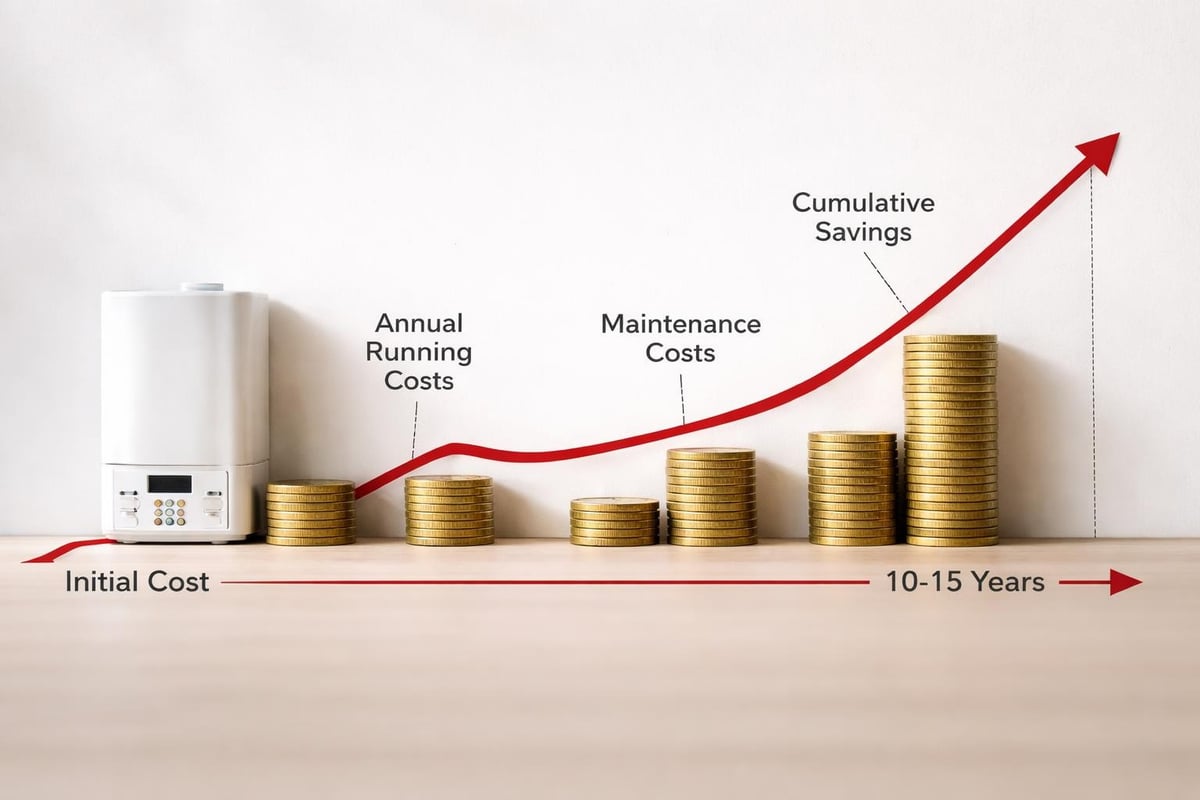
Modern condensing boilers achieve efficiency ratings of 88-94%, recovering heat from exhaust gases that older models simply vented to atmosphere. This technological advancement transforms the gas boiler cost equation, as higher initial investment delivers substantial ongoing savings through reduced fuel consumption.
The ErP (Energy-related Products) rating system provides standardised efficiency measurements. A-rated boilers represent the highest efficiency category, whilst older G-rated systems waste significant energy. Replacing a 15-year-old boiler typically at 70% efficiency with a modern 90% efficient model can reduce annual gas consumption by approximately 22%, translating to £150-£200 in annual savings for average households.
Condensing technology requires proper installation to function optimally. The condensate drain must slope correctly, and return water temperatures must remain sufficiently low to promote condensation. Professional installers ensure these critical requirements are met, maximising efficiency and return on investment.
Warranty Coverage and Protection
Manufacturer warranties significantly influence long-term value. Standard warranties typically range from two to ten years, with extended coverage often available for premium models or through authorised installers. The warranty period affects the gas boiler cost-benefit calculation, as longer coverage reduces potential repair expenses during the appliance's early years.
Some manufacturers offer enhanced warranties when installation is completed by accredited engineers and regular servicing is maintained. These programmes provide valuable protection and often include annual services within the warranty package, improving overall value proposition.
Finance Options and Payment Flexibility
The substantial upfront gas boiler cost can challenge household budgets, prompting many homeowners to explore financing alternatives. Various payment options make boiler replacement accessible even when immediate funds are limited.
Interest-free credit schemes, often available through manufacturers or installers, spread costs over 12-24 months without additional charges. These arrangements typically require credit approval and sometimes a modest deposit. Longer finance terms with interest charges extend to five or ten years, reducing monthly payments but increasing total costs.
Government schemes occasionally provide grants or incentives for boiler upgrades, particularly when replacing extremely inefficient or non-condensing models. The finance options available through reputable heating companies often provide competitive terms tailored to homeowner circumstances.
Common financing approaches include:
- Manufacturer-backed interest-free credit (12-24 months)
- Extended payment plans with competitive interest rates
- Personal loans from banks or building societies
- Home improvement loans secured against property value
- Energy efficiency grants when available
According to regional cost analysis, spreading the gas boiler cost through manageable monthly payments makes upgrading to high-efficiency systems accessible to broader homeowner demographics, accelerating the transition away from aging, inefficient heating technology.
Repair Versus Replacement Decisions
Determining whether to repair an existing boiler or invest in complete replacement represents a common dilemma. The gas boiler cost for major repairs sometimes approaches half the price of a new installation, making replacement the more economical long-term choice.
Age serves as the primary decision factor. Boilers exceeding 10-12 years typically justify replacement rather than repair, particularly when facing significant component failures. Older systems operate less efficiently, consume more fuel, and increasingly struggle to source compatible replacement parts as manufacturers discontinue support.
Indicators favouring replacement over repair:
- Boiler age exceeds 12 years
- Multiple component failures within short periods
- Declining efficiency and rising fuel bills
- Frequent breakdowns requiring emergency callouts
- Replacement parts becoming scarce or expensive
- No condensing technology in current system
The comparison of repair versus replacement costs demonstrates that whilst individual repairs appear economical, cumulative maintenance expenses over several years often exceed new boiler costs. Additionally, modern systems deliver superior reliability, efficiency, and comfort compared to aging equipment.
Professional Installation and Gas Safe Compliance
Legal requirements mandate that only Gas Safe registered engineers install, service, or repair gas boilers. This critical safety regulation protects homeowners from dangerous installations whilst ensuring compliance with building regulations and insurance requirements. The gas boiler cost should always include professional, certified installation-cutting corners by employing unregistered fitters creates serious safety hazards and potential legal complications.
Gas Safe registration represents the legal requirement for gas work in the United Kingdom, replacing the previous CORGI scheme in 2009. Registered engineers carry identification cards displaying their registration number and the specific gas work categories they're qualified to perform. Homeowners should always verify credentials before permitting any gas work.
Building regulations compliance forms another essential consideration. Installations must meet Part L requirements governing energy efficiency, Part J covering combustion appliances and fuel storage, and potentially Part P for electrical connections. Professional installers handle these regulatory requirements, obtaining necessary approvals and providing compliance certificates upon completion.
Certification and Documentation
Following installation, homeowners should receive several important documents confirming proper completion. The Building Regulations Compliance Certificate demonstrates that work meets legal standards. The boiler manufacturer's warranty documentation activates guarantee coverage. The Gas Safe installation certificate records essential safety checks and system specifications.
These documents prove invaluable for future property sales, insurance claims, or warranty service requests. Maintaining comprehensive records protects the investment and facilitates smooth transactions when circumstances require documentation of proper installation and maintenance history.
Regional Pricing Variations
The gas boiler cost varies across different regions, reflecting local economic conditions, installer availability, and regional demand patterns. Kent and the wider South East typically experience prices approximately 10-20% higher than national averages, though rural areas sometimes see premiums due to reduced installer competition.
Urban centres benefit from greater installer competition, potentially moderating prices despite higher general living costs. Rural properties may face additional charges for travel and may require extended installation periods if materials need ordering from distant suppliers. Properties in conservation areas or listed buildings sometimes encounter additional requirements increasing overall costs.
Local fuel availability also influences expenses. Properties with mains gas access enjoy lower operating costs and broader boiler choices compared to those relying on LPG or oil. Converting from oil to LPG boiler installation involves specific equipment and may require tank installation or connection modifications.
| Region | Cost Variation from National Average | Typical Total Installation |
|---|---|---|
| London and Inner South East | +15% to +25% | £2,300-£4,500 |
| Kent and Outer South East | +10% to +20% | £2,200-£4,200 |
| National Average | Baseline | £2,000-£3,800 |
| Midlands and North | -5% to -10% | £1,900-£3,400 |
Detailed analysis from gas boiler cost research confirms these regional variations whilst emphasising that individual quotes vary substantially based on specific project requirements. Multiple quotations from reputable installers provide the most accurate pricing for particular circumstances.
Value-Added Services and Extended Benefits
Beyond basic installation, comprehensive heating companies offer value-added services that enhance the gas boiler cost proposition. These additional services address related heating system components, improving overall efficiency and extending equipment lifespan.
Powerflushing services remove accumulated sludge and debris from existing radiators and pipework before new boiler installation. This essential procedure, costing £300-£600, prevents contamination from damaging the new appliance and ensures optimal heat distribution throughout the property.
System upgrades often accompany boiler replacement. Converting from conventional heating to modern combi systems eliminates redundant tanks and cylinders, freeing valuable loft and airing cupboard space. Alternatively, upgrading to unvented cylinders delivers mains-pressure hot water throughout larger properties whilst maintaining the benefits of stored hot water capacity.
Complementary services enhancing boiler installations:
- Chemical inhibitor treatment protecting against corrosion
- Radiator balancing for even heat distribution
- Thermostatic radiator valve upgrades
- Water treatment systems for hard water areas
- Zone control installation for room-by-room temperature management
These enhancements increase the initial gas boiler cost but deliver improved comfort, efficiency, and system longevity that justify the additional investment for many homeowners.
Understanding the complete picture of gas boiler cost-from initial purchase through installation to ongoing operational expenses-empowers homeowners to make informed heating system decisions that balance immediate affordability with long-term value. For Kent residents seeking professional boiler installation, repair, or servicing backed by Gas Safe registered engineers and over 20 years of industry experience, Castle Heating Kent provides comprehensive heating solutions tailored to individual property requirements and budget considerations. Whether you're planning a straightforward replacement or a complete heating system upgrade, expert guidance ensures optimal results and lasting satisfaction.

