
Central Heating Boiler Service: Essential Guide 2026
Regular maintenance of your home's heating system is one of the most important responsibilities for any property owner. A central heating boiler service ensures your system operates safely, efficiently, and reliably throughout the year, particularly during Kent's colder months when you depend on consistent warmth. This comprehensive guide explores everything homeowners need to know about professional boiler servicing, from understanding what's involved to recognising when your system needs attention.
Why Annual Boiler Servicing Is Essential
The importance of scheduling a central heating boiler service cannot be overstated. Annual servicing protects your household from potentially dangerous carbon monoxide leaks, which remain undetectable without proper testing equipment. Gas Safe registered engineers use specialised tools to measure emissions and verify that combustion is occurring correctly.
Beyond safety considerations, regular servicing extends your boiler's operational lifespan considerably. Components that receive annual inspection and cleaning experience less wear and tear, reducing the likelihood of unexpected breakdowns. This preventative approach proves far more economical than reactive repairs following system failures.
Energy efficiency represents another compelling reason for annual maintenance. A well-serviced boiler consumes less fuel to produce the same heat output, directly reducing your energy bills. According to EDF Energy's comprehensive servicing guidance, a poorly maintained boiler can lose efficiency by up to 30%, substantially increasing household running costs.
Most boiler manufacturers require proof of annual servicing to maintain warranty coverage. Missing even one year's service can void your warranty entirely, leaving you liable for potentially expensive repairs. This requirement applies to both new installations and existing systems still within their warranty period.
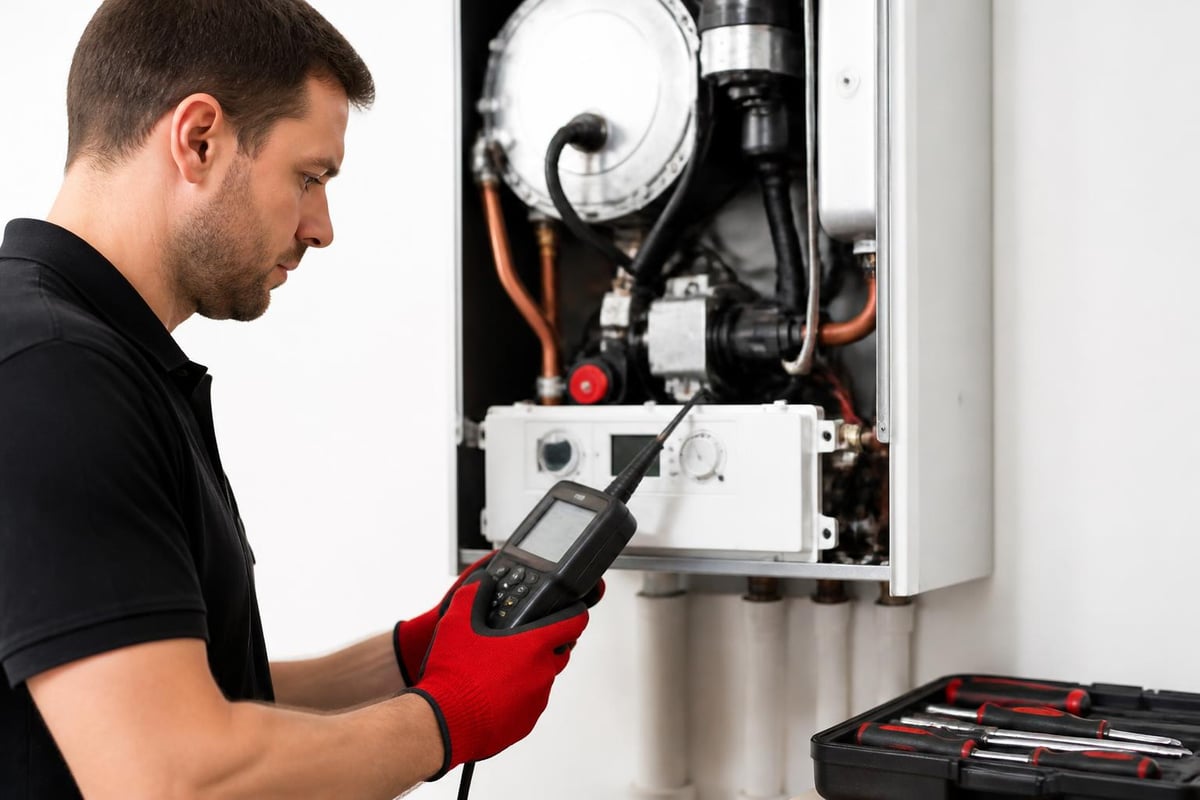
What's Included in a Professional Boiler Service
Understanding the components of a thorough central heating boiler service helps homeowners appreciate the value this maintenance provides. A comprehensive service typically takes between 45 and 90 minutes, depending on the boiler type and condition.
Visual Inspection and Testing Procedures
Engineers begin with a detailed visual examination of the boiler casing, pipework, and surrounding area. They check for corrosion, leaks, or damage that might compromise safe operation. The flue termination receives particular attention, ensuring combustion gases discharge safely outside the property.
Internal components undergo systematic testing. The heat exchanger, burner, and ignition systems all require inspection for wear or carbon buildup. These elements directly affect combustion efficiency and safety, making their examination crucial.
Control systems and safety devices need verification to confirm they respond correctly. This includes testing the overheat thermostat, pressure relief valve, and automatic air vent. Each safety mechanism must function properly to protect your home.
Performance Measurements and Adjustments
Gas pressure measurements ensure your boiler receives the correct fuel supply. Engineers test both standing pressure and working pressure, adjusting settings if necessary. Incorrect gas pressure causes inefficient combustion and potential safety hazards.
Flue gas analysis provides critical data about combustion quality. Using electronic analysers, engineers measure carbon monoxide and carbon dioxide levels in exhaust gases. These readings indicate whether the boiler burns gas cleanly and efficiently.
The condensate trap requires cleaning during every service. This component removes acidic water produced during condensation, preventing corrosion. A blocked condensate trap can cause boiler lockouts, particularly in winter when freezing becomes a risk.
| Service Component | Purpose | Frequency |
|---|---|---|
| Visual inspection | Identify leaks, corrosion, damage | Annually |
| Flue gas analysis | Verify safe combustion | Annually |
| Pressure testing | Ensure correct gas supply | Annually |
| Safety device testing | Confirm protection systems work | Annually |
| Component cleaning | Maintain efficiency | Annually |
Recognising When Your Boiler Needs Servicing
While annual servicing follows a predictable schedule, certain warning signs indicate your boiler requires immediate professional attention. Recognising these symptoms helps prevent minor issues escalating into serious problems.
Strange noises from your heating system demand investigation. Banging, whistling, or gurgling sounds suggest various potential issues, from air in the system to limescale accumulation on the heat exchanger. These noises often indicate reduced efficiency and impending component failure.
Irregular flame appearance provides another important indicator. A healthy gas boiler flame burns crisp blue. Yellow or orange flames suggest incomplete combustion, potentially producing dangerous carbon monoxide. This situation requires immediate attention from a Gas Safe registered engineer.
- Unexplained increases in energy bills without usage changes
- Radiators taking longer to heat or developing cold spots
- Frequent need to repressurise the system
- Unusual smells around the boiler
- Pilot light repeatedly extinguishing
Error codes flashing on the boiler display indicate specific faults detected by internal sensors. Modern boilers feature sophisticated diagnostics that identify problems before they cause complete breakdowns. Recording these codes helps engineers diagnose issues more efficiently.
Choosing the Right Service Provider in Kent
Selecting a qualified professional for your central heating boiler service requires careful consideration. The competence and reliability of your chosen engineer directly affects your household's safety and heating system performance.
Essential Qualifications and Registration
Gas Safe registration represents the legal requirement for anyone working with gas appliances in the UK. Every engineer should carry a valid Gas Safe ID card displaying their photograph, registration number, and qualified appliance categories. Always verify this registration before permitting any work.
Experience working with your specific boiler brand and model proves beneficial. Different manufacturers employ varying technologies and configurations. Castle Heating Kent's engineers possess extensive experience across all major boiler brands, having served domestic properties throughout Kent since 2010.
Professional indemnity insurance and public liability coverage protect homeowners if problems occur. Reputable companies maintain comprehensive insurance, demonstrating their commitment to professional standards and customer protection.
Evaluating Service Packages and Pricing
Service costs vary depending on location, boiler type, and service package inclusions. Kent homeowners typically pay between £80 and £150 for a standard annual service. Combination services that include powerfullushing or system cleaning cost more but provide comprehensive system care.
Many heating companies offer service plans that spread costs across monthly payments whilst providing additional benefits. These plans often include priority emergency callouts, discounted repairs, and annual servicing scheduled automatically. For homeowners managing multiple properties, modern solutions like TenancyIQ help track maintenance schedules and compliance requirements efficiently.

The Link Between Servicing and System Efficiency
Regular central heating boiler service directly influences how efficiently your heating system operates. Understanding this relationship helps homeowners appreciate the financial benefits that professional maintenance delivers.
Modern condensing boilers achieve optimal efficiency when all components function correctly. The heat exchanger requires particular attention, as even minor limescale deposits reduce heat transfer efficiency. Engineers clean these components during servicing, restoring peak performance.
System water quality significantly affects boiler longevity and efficiency. Contaminated water accelerates corrosion and creates sludge that circulates through radiators and pipework. Professional servicing includes water quality testing, with recommendations for treatment if problems exist.
The U.S. Department of Energy's efficiency guidance emphasises that well-maintained boilers operate 5-10% more efficiently than neglected systems. This efficiency improvement translates directly into reduced fuel consumption and lower energy bills throughout the year.
Addressing Common Efficiency Issues
Air trapped within the heating system prevents proper circulation, creating cold spots on radiators and forcing the boiler to work harder. Engineers bleed radiators and install automatic air vents during servicing to prevent air accumulation.
Incorrect boiler pressure affects system efficiency and can trigger safety lockouts. The ideal operating pressure ranges between 1.0 and 1.5 bar when the system runs. Engineers adjust pressure during servicing and investigate any rapid pressure loss indicating leaks.
| Efficiency Factor | Impact When Neglected | Improvement After Service |
|---|---|---|
| Heat exchanger cleanliness | 10-15% efficiency loss | Restored to manufacturer spec |
| Combustion settings | 5-10% fuel waste | Optimised for clean burning |
| System water quality | Accelerated corrosion | Protected with inhibitors |
| Component wear | Increased breakdown risk | Early replacement recommended |
Boiler Service Requirements for Landlords
Property landlords face specific legal obligations regarding central heating boiler service in rental properties. Understanding these requirements ensures compliance whilst protecting tenants and property investments.
The Gas Safety (Installation and Use) Regulations 1998 mandate annual gas safety inspections for all rental properties with gas appliances. This inspection must be completed by a Gas Safe registered engineer who issues a CP12 certificate confirming safe operation.
The annual gas safety check differs slightly from a standard service, focusing primarily on safety rather than efficiency optimisation. However, many landlords combine both services, ensuring comprehensive system care whilst meeting legal obligations efficiently.
Landlords must provide tenants with a copy of the gas safety certificate within 28 days of the inspection. New tenants receive a copy before occupancy begins. These records must be retained for two years, creating a documented maintenance history.
Failure to arrange annual gas safety inspections can result in substantial penalties, including fines up to £6,000 and potential imprisonment for serious breaches. Beyond legal consequences, neglecting gas safety checks exposes landlords to significant liability if carbon monoxide incidents occur.
Understanding Boiler Service Costs and Value
Evaluating the cost of a central heating boiler service requires considering both immediate expenditure and long-term financial benefits. Whilst service costs represent a predictable annual expense, they prevent far more expensive emergency repairs and replacements.
Standard service costs in Kent typically range between £80 and £150, with variations based on several factors. Older boilers or those with existing faults may require additional time and parts, increasing service costs. Remote locations sometimes incur travel surcharges, though most reputable companies maintain transparent pricing.
Comparing Service Options
One-off annual services suit homeowners who prefer paying as needed without ongoing commitments. This approach offers flexibility but typically costs more per service than package deals. Emergency callouts and repairs incur full standard rates.
Annual service plans provide better value for most homeowners. These contracts include scheduled servicing plus additional benefits like priority emergency response and discounted repairs. Monthly payment options make budgeting easier whilst ensuring maintenance never gets overlooked.
For homeowners considering boiler replacement, service history significantly affects resale value. Properties with documented annual servicing command higher prices and sell faster than those without maintenance records. This documentation demonstrates responsible ownership and reduces buyer concerns about hidden problems.
If upgrading your boiler proves necessary, flexible payment options make modern, efficient systems more accessible. Boiler finance packages spread costs through manageable monthly instalments, allowing homeowners to benefit from improved efficiency without substantial upfront expenditure.


Seasonal Considerations for Boiler Maintenance
Timing your central heating boiler service strategically maximises benefits and ensures your system operates reliably when needed most. Understanding seasonal demands on your heating system helps determine the optimal service schedule.
Autumn represents the ideal season for boiler servicing. Scheduling maintenance during September or October ensures your system operates perfectly before winter heating demands begin. Engineers typically experience lower call volumes during autumn, often resulting in quicker appointment availability and potentially reduced rates.
Summer servicing offers similar advantages, with engineers generally less busy than during peak heating season. However, many homeowners overlook boiler maintenance during warm months when heating seems unnecessary. This oversight can lead to unpleasant surprises when cold weather arrives and boilers that haven't operated for months fail to start.
Weather-Related Maintenance Considerations
Winter servicing becomes necessary if you've missed earlier opportunities, though scheduling proves more challenging during peak demand. Emergency breakdowns increase during cold spells, with engineers prioritising properties without heat. Booking winter appointments requires flexibility and may involve longer waiting times.
Kent's coastal climate presents specific challenges for heating systems. Salt-laden air accelerates corrosion on external boiler components and flue terminals. Properties near the coast benefit from more frequent inspections, checking for corrosion damage that develops faster than inland locations.
According to best management practices outlined by the U.S. Department of Energy, routine inspections should align with periods of lower system demand, allowing thorough testing without disrupting building occupants. This principle applies equally to domestic heating systems.
Common Boiler Problems Identified During Servicing
Professional central heating boiler service frequently identifies developing issues before they cause complete system failures. Understanding common problems helps homeowners appreciate the preventative value that regular maintenance provides.
Heat Exchanger and Combustion Issues
Limescale accumulation on heat exchangers represents one of the most prevalent problems in hard water areas. Kent's water contains relatively high mineral content, making scale buildup particularly common. This accumulation insulates heating surfaces, reducing efficiency and potentially causing overheating.
Burner problems manifest through several symptoms, including irregular ignition, flame quality issues, or complete failure to light. Carbon deposits on burner jets restrict gas flow, creating inefficient combustion. Engineers clean burners during servicing, restoring proper flame patterns and combustion efficiency.
Cracked heat exchangers constitute serious safety hazards, potentially allowing combustion gases to mix with domestic water or enter living spaces. While relatively rare, this problem requires immediate boiler replacement. Regular servicing identifies early signs of heat exchanger stress before catastrophic failure occurs.
Control and Safety Component Failures
Faulty thermostats cause numerous heating complaints, from inadequate temperatures to continuous boiler operation. Modern boilers employ multiple thermostats controlling different functions. Engineers test each sensor during servicing, verifying accurate temperature readings and proper system response.
Pressure relief valve problems often go unnoticed until they cause water leaks or system pressure irregularities. These safety devices must operate correctly to prevent dangerous pressure buildup. Service visits include testing pressure relief valves under simulated fault conditions.
- Expansion vessel failures causing pressure fluctuations
- Pump bearing wear creating circulation problems
- Diverter valve faults preventing hot water production
- Printed circuit board failures affecting multiple functions
- Gas valve malfunctions preventing safe ignition
The American Boiler Manufacturers Association emphasises that emerging diagnostic technologies enable earlier fault detection, improving safety and reliability. Modern boilers incorporate sophisticated sensors that record operational data, helping engineers identify problems during routine servicing.
DIY Maintenance Between Professional Services
Whilst annual professional servicing remains essential, homeowners can perform simple maintenance tasks that complement expert care. These routine checks help identify problems early whilst maintaining optimal system performance between service visits.
Monthly visual inspections require only a few minutes but provide valuable early warning of developing issues. Check around the boiler for water leaks, unusual stains, or corrosion. Examine the flue terminal outside, ensuring it remains clear of obstructions and shows no signs of damage.
Pressure monitoring represents the most important routine check homeowners can perform. Modern boilers display system pressure on built-in gauges. Pressure should remain between 1.0 and 1.5 bar during operation. Rapidly dropping pressure suggests leaks requiring professional investigation.
Safe Homeowner Maintenance Tasks
Bleeding radiators removes trapped air that accumulates over time, improving heat distribution and system efficiency. This simple task requires only a radiator key and cloth to catch drips. Start with radiators furthest from the boiler, working back toward the system centre.
Condensate pipe freezing causes many winter boiler breakdowns. External condensate pipes benefit from insulation, particularly sections exposed to cold winds. If freezing occurs, carefully thawing the pipe with warm (not boiling) water usually restores operation.
However, homeowners must recognise the limits of DIY maintenance. Internal boiler work requires Gas Safe qualifications and appropriate tools. Attempting unauthorised repairs risks serious injury, property damage, and invalidating insurance coverage. Issues like pipe blockages elsewhere in your system may require professional diagnosis to distinguish from boiler problems.
Making the Most of Your Service Appointment
Preparing for your central heating boiler service appointment ensures engineers work efficiently whilst addressing all your heating system concerns. A little preparation maximises the value received from professional maintenance visits.
Clear access to the boiler proves essential. Remove stored items from cupboards housing boilers, allowing engineers to work safely and efficiently. Ensure they can reach all sides of the appliance for thorough inspection.
Document any concerns or unusual behaviour you've observed. Note when problems occur, any error codes displayed, and whether issues are intermittent or constant. This information helps engineers diagnose problems more quickly, particularly for intermittent faults that may not occur during the service visit.
Questions to Ask Your Engineer
Engage with your service engineer to understand your system better. Ask about expected component lifespan, particularly for elements showing wear. Understanding when replacement might become necessary helps with financial planning.
Request guidance on optimising heating controls for your household routine. Many homeowners fail to utilise programmable thermostats effectively, missing opportunities for energy savings. Engineers can demonstrate features and suggest programming adjustments.
Enquire about system upgrades that might improve efficiency or convenience. Modern smart heating controls offer substantial benefits over older systems, providing remote access and intelligent scheduling. Engineers can explain compatibility with your existing system.
According to Consumer Reports' comprehensive buying guidance, understanding your current system's efficiency helps determine whether upgrading makes financial sense. Service appointments provide opportunities to discuss these considerations with qualified professionals.
Environmental Benefits of Regular Servicing
Beyond personal benefits, maintaining your central heating boiler service schedule contributes positively to environmental sustainability. Well-maintained heating systems consume less fuel whilst producing fewer harmful emissions.
Inefficient boilers waste energy, increasing carbon emissions unnecessarily. A poorly tuned burner produces incomplete combustion, releasing more carbon monoxide and unburnt hydrocarbons. Annual servicing optimises combustion settings, minimising environmental impact whilst reducing fuel consumption.
Modern condensing boilers achieve efficiency ratings above 90% when properly maintained. However, this efficiency degrades without regular servicing. Keeping your boiler operating at peak efficiency reduces your household's carbon footprint significantly over the appliance's lifespan.
| Environmental Factor | Well-Serviced Boiler | Neglected Boiler |
|---|---|---|
| Annual carbon emissions | Baseline | 15-20% higher |
| Fuel consumption | Optimal | 10-15% increased |
| Harmful emissions | Minimised | Elevated levels |
| Component longevity | Extended lifespan | Premature replacement |
Recent research into predictive maintenance demonstrates how early fault detection prevents efficiency losses, reducing environmental impact whilst improving system reliability. Though this research focuses on district heating, principles apply equally to domestic systems.
Service Records and Their Importance
Maintaining comprehensive records of every central heating boiler service provides numerous benefits throughout your boiler's operational life. These documents serve multiple purposes beyond simple maintenance tracking.
Service records prove invaluable when selling property. Prospective buyers and their surveyors examine heating system maintenance history carefully. Complete documentation demonstrates responsible ownership whilst providing confidence in the system's condition and remaining lifespan.
Warranty claims require proof of annual servicing. Manufacturers reject claims if service records show gaps in maintenance history. Digital records and certificates from Gas Safe registered engineers provide the necessary evidence to support warranty claims.
Insurance companies increasingly request proof of regular maintenance when assessing heating-related claims. Properties with documented service history face fewer challenges during claim processing, as insurers recognise that well-maintained systems pose lower risks.
Creating a dedicated folder for all heating system documentation simplifies record keeping. Include service certificates, warranty information, installation documentation, and any repair invoices. Digital copies provide backup protection against document loss whilst enabling easy sharing with engineers, estate agents, or insurance assessors.
The systematic approach adopted by established companies like Castle Heating Kent ensures clients receive comprehensive service documentation automatically, creating reliable maintenance histories without additional effort.
Regular central heating boiler service protects your household's safety, comfort, and finances through preventative maintenance that identifies problems before they escalate. Annual servicing by qualified engineers ensures your heating system operates efficiently, reducing energy costs whilst extending equipment lifespan. Whether you require routine maintenance, system upgrades, or emergency repairs throughout Rochester, Gravesend, and surrounding Kent areas, Castle Heating Kent delivers professional heating solutions backed by Gas Safe registration and over 20 years of experience serving domestic properties.

